
CHILDHOOD
Tnn... Tnn... Tnn... The bronze thali rang.
बधाई द्योजी “Badhai dyoji!! Seth Laduramji ka pelo poto huyo hai..!!” (Congratulations!! Seth Laduramji has got his first grandson…!!)
The News spread like lightning in Jaswantgarh village. First grandson of Seth Laduramji, and that too, after two daughters!! Who in the village would wait after listening to such great news?
Dadaji Laduramji was busy distributing greetings to the incomers. Father Hanmanbagasji was smiling mildly. This was his only way of expressing his happiness. It was not in his nature to laugh openly.
It was the Dashami of Samvat 1985 Ashwin shukla i.e. the night of 24 October 1928. When the hands of the clock reached five minutes past two o'clock, that the first kulbhushan of Dadaji Laduramji's clan descended after two daughters. Who knew that the child to whom elder daughter-in-law Rampyari Devi gave birth that day in 1928 in “Japaghar” i. e. 10 ft x 7 ft domestic “maternity clinic”, The Creator himself had caressed the head with his hand and sent him to the Earth. Only fate knew that the first page of an incredible story of virtue, diligence and leadership was being written today.
Panditji prepared the horoscope of the new born child according to astrology and told the alphabets with which the name was to start. Among the possible names, Dadaji Laduramji found the name "Shreeram" to be the most apt. Six brothers and three sisters were born after Shreeram. So Pyaridevi (colloquial name of Rampyari) became the mother of thirteen children. Two of these daughters were called back by God a few days after their birth, leaving a team of 11.
Grandmother Sarju Devi's happiness knew no bounds after getting the first grandson as gift. In order that the new-born gets plenty of natural nutritious milk, various food items containing gum, carom seeds, dry ginger, jaggery and many strengthening herbs were prepared and fed to the lactating mother. This is how the accumulated wealth of experience and knowledge was passed down from generation to generation in Indian families. Such delicious dishes were destined only for जापायती "japayati". Healthy unique food and special care after the pain of pregnancy and “japa“, were, after all a sort of 'consolation prize'.
Laduramji, a deep connoisseur of astrology, already knew this. He had chosen Rampyari, daughter of Ramchandraji Totla of Chandarun village, for his elder son हणमाना “Hanmana” because he could clearly see in her that she had the ability to create a team as big as a cricket team of sons and daughters. The foundation for a bright future had been laid.
At that time, Rampyaridevi daughter of Totla family got an invitation call from her pihar (maternal home) at Chandarun. She went to pihar with around three-four months old baby Shreeram. The biggest attraction of pihar was that the daughter could sleep a lot by handing over the baby to her mother i.e. Nani. In a way, it was the pleasure of being 'off duty'. However, that imaginary happiness turned out to be very costly. In those very days, there was a widespread outbreak of बड़ी माता "badi mata" i.e. smallpox in the village. Shreeram came in its grip. The outbreak was so severe that there was not a place left in his whole body where there was no blister. Even the eyes were completely covered. In those days, there was no medical treatment for small pox. Fumigation of dried dung of donkey, caressing the itch with peacock feather – such traditional cures were only available. Medical science was not quite reachable. Reasons like illiteracy and superstition were already there. It was natural that people had no other option but to wait for the grace of God. The most reliable remedy was मनौती 'manauti' of शीतला माता Sheetala Mata'. It was a strange example of superstition that gift of life was sought from the goddess of small pox herself.
It was believed that more difficult and more deadly the मनौती to save life, more pleased and merciful Sheetla Mata will be. With this faith, Naniji pronounced,जात "Jaat," that she would walk two and a half kilometers barefoot, with Hearth full of hot coals on her head to the Sheetla Mata temple in the afternoon to please her. Mother Pyaridevi took a vow that she would worship 'Amarkundalo' every year for the rest of her life. Amarkundalo consisted of 9 lamps lit in a puja. Mother Pyaridevi fulfilled her vow throughout her life. After the disability at the age of 75 year, she passed on the vow to her daughter-in-law i.e. Shriram's wife Sumandevi to continue and she too fulfilled it. This prayer perhaps saved the life of Shreeram till his age of 86 years.
Another blow struck over this deadly disaster. As soon as Seth Laduramji got the news of his grandson, Shriram's माता उपडणे 'mata upadne' (small pox), he lost his temper. The entire Totla family was held responsible for endangering the life of future torchbearer of the Taparia family. Dadaji gave an ultimatum to Nanaji जे म्हारा टाबर न कीं हुग्यो तो देख लीज्यो पछै मैँ कांई करूंलो 'Je mhara tabar ki ka hui gyo toh dekh lijyo pachhe mai kain karoonlo' (If something happens to my child, see what I do). The whole Totla family was terribly shaken. The entire Totla family got involved in saving the life of invaluable heritage of the Taparia family. But what could they even do? During this episode what ordeal Pyaridevi must have gone through? Keeping awake day and night to take care of the baby and pray to Sheetla Mata!! Where was the time to care about one's own life and who cared for her life?
Fortunately Sheetla Mata heard the compassionate call that arose from the depths of a mother's heart. While villages after villages were getting annihilated due to smallpox, both mother and child reached Jaswantgarh safely. Laduramji did not have to display his furious form.
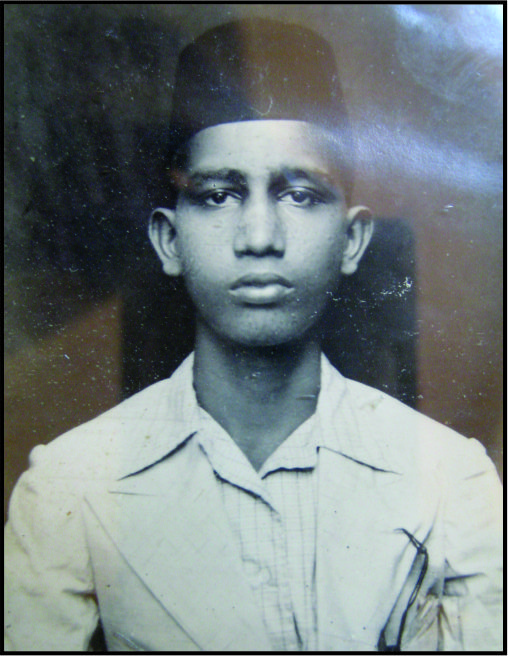
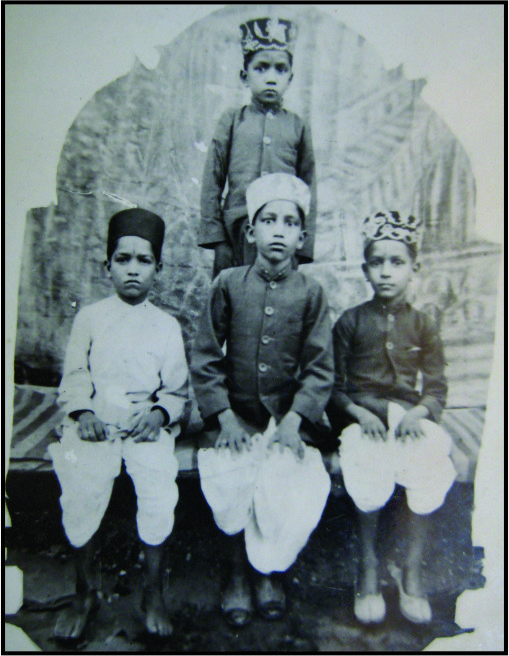
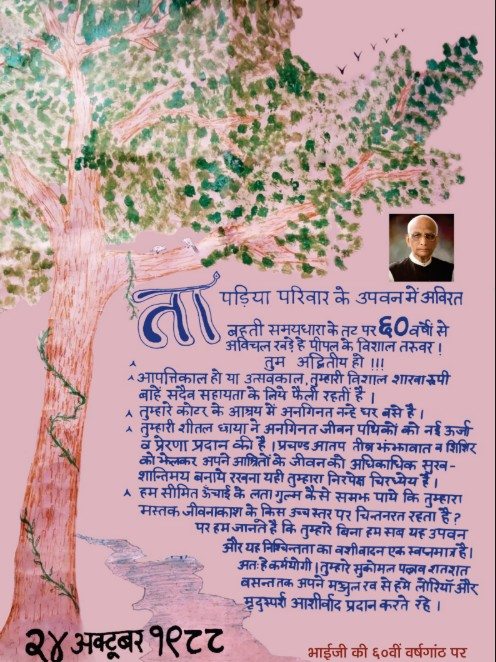
Shriramji's childhood that he spent in the streets of Jaswantgarh filled his every vein with a profound love for his motherland. जननी जन्मभूमिश्च स्वर्गादपि गरीयसी 'Janani Janmabhoomischa Swargadapi Gariyasi' became his life mantra.
That was the dawn of the financial golden age of the Taparia family. Dadaji Laduramji rapidly expanded the textile business in Calcutta. He also established his three younger brothers in business. He himself could not go to school but he had fully understood the importance of education. Higher studies were not available in Jaswantgarh, so Shreeramji was made to stay in Calcutta for studies.
It is difficult for the youth born in today's nuclear family to understand the ways of the joint family of those days. All the children were looked-after jointly. It was not at all necessary that the parents should take care of their own children. Work of all the children were done on wholesale on mass production basis. One lady would bathe all of them, someone else would feed them, some other would make them study with a stick and another would put them to sleep. In that process, the child was sent away from his parents anywhere, under the protection of uncle, father, elder brother, maternal uncle, maternal Dadaji. A child could not throw tantrums there which he could throw in front of his mother. The authority of the elders was unquestioned. The guardian could also beat other's child and he did used to beat with affection. In this way, that child used to learn invaluable lessons of tolerance and adjustment on one hand, and on the other, to consider the whole joint family as his own unbreakable family would get into his veins. Dadaji Laduramji was like a grandfather figure to everyone, whom everyone was afraid of and also had the deepest respect. He took the final decision for all the elders as well as all children. Shreeram also grew up in the same culture. No one else adapted the thoughts and values of Dadaji Laduramji as much as he did. He passed high school from Maheshwari Vidyalaya in Calcutta. He then took admission in the Scottish Church College for his B.A.
There was a tradition of tuition. Dadaji had understood that our culture is hidden in the Sanskrit language. That's why a Sanskrit teacher was searched out for all the children. He was the great scholar Shri Ramakantji Upadhyay. He was capable in every way, but Dadaji saw a risk in him. Upadhyayji was a senior preacher of Aryasamaj. Dadaji was a fierce Sanatandharmi and against Aryasamaj. He adopted the policy of making a thief only, the watchman. Expressing great faith in Panditji, he expressed his concern, 'Panditji, these days a big wind of Aryasamaj is blowing. Please make sure that the children do not become Aryasamajis'.
But what was bound to happen did happen. Even Dadaji did not know as to what would be the side effect of the tuition and how deep the seed of Indian culture that tuition would sow in the Taparia family, whose effect would be there for generations.
It so happened that Sanskrit language was taught, but at the same time Ramakantji Upadhyay inculcated the values of character, health-awareness, tactfulness, simplicity, minimalism, egolessness, altruism, patriotism etc in the teenagers and youth of that generation, who were all growing up in a joint family. Less in some, more in some. But Shreeramji embibed them completely. As a result of that, even after becoming wealthy by the grace of Lakshmi, the Taparia family had remained safe from the evils that has affected many wealthy families. Among the reasons this Taparia family has such a high reputation in the society today, a big credit goes to this one deed of Dadaji. The family would never be able to repay the debt of the obligations of respected Ramakantji.
YOUTH
Now onwards, instead of Shreeramji's name, you will get to read the name Bhaiji in the narrative ahead, because here after, not only the family, but the entire Maheshwari society used to address him with affection and respect as Bhaiji and is still remembers him by the same name today also.
After completing his BA, Bhaiji joined the family business under Dadaji Laduramji. Family business means textile business. The story of how Dadaji gave a huge shape to the textile business is also very interesting and inspiring, which you will read later.
At first, Dadaji called his brothers to Calcutta and established them in the textile business. Initially let them be together and then independent in Business. After this, his sons and then grandsons came to Calcutta one by one in business. Dadaji had a wonderful balance of love and discipline. Due to the influence of his personality which was so overpowering that no one indulged either in addictions or in luxuries, nor did the tendency to quarrel with each other developed. Dadaji had unique knowledge of when, where, how much to give relaxation and when to pull the reins.
When Bhaiji turned 15 years old, he became ब्यावमान 'Byavman' i.e. 'Fit for Marriage'. So the search started for alliance. In those days, the marriage was less between just the boy and the girl, and more a relationship between two families. Boys and girls were innocent children. So how to know their qualities and nature? There were two ways. Firstly, scientific conclusion was drawn from the family's reputation in the society, in terms of piety, large heartedness, स्वभाव Nature and way of thinking of the Head of the family, as to what would be the स्वभाव Nature and way of thinking of that marriageable boy or girl in the future. The science of pedigree was fully practiced. The second way was to match the horoscope. Dadaji had a wonderful knowledge of Astrology. The whole picture used to emerge from the horoscope ie marital happiness, health and happiness derived from offspring (santan-sukh). Shri Jaswantmalji Mundara who was originally from Didwana, used to live behind Laxmi Bhavan. He proposed his niece 'Godavari', daughter of Seth Shri Lakshminarayanji Mundra of Didwana before Dadaji. His proposal passed in both the tests of Dadaji.
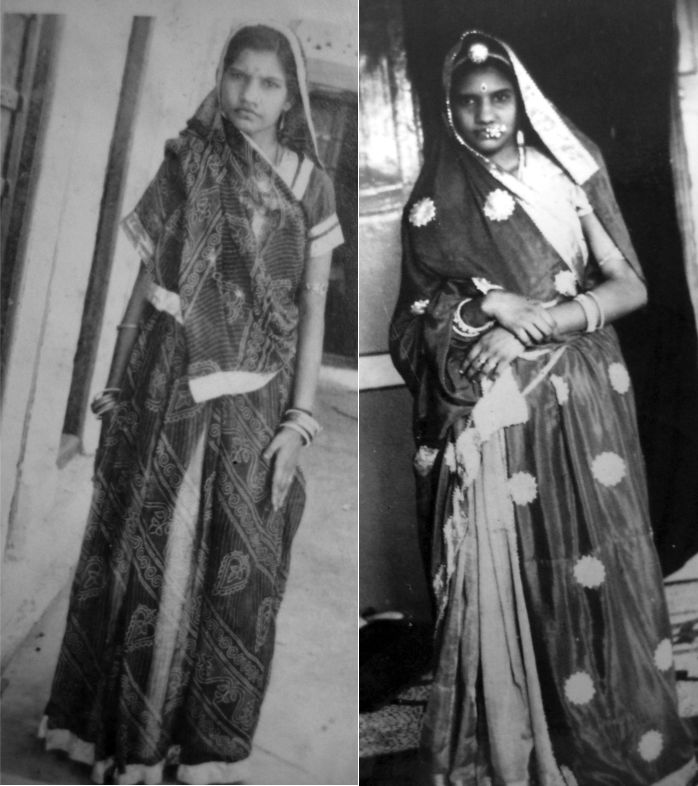
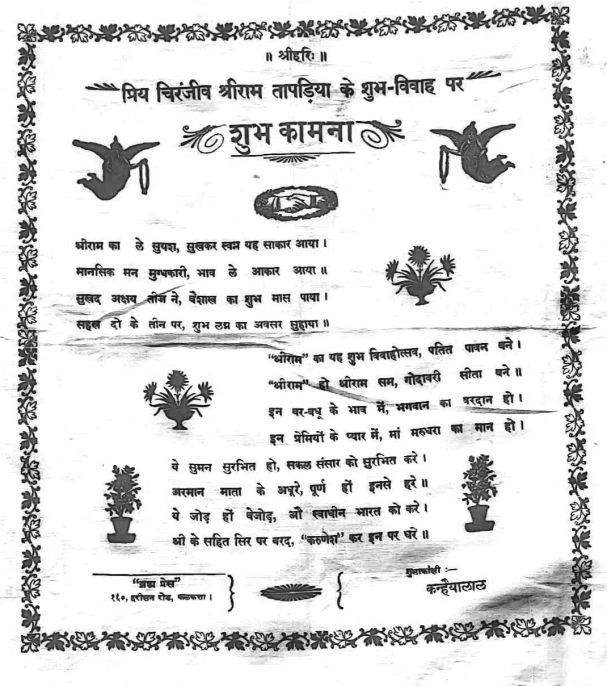
Dadaji sent an Empowered group consisting of younger Dadaji Ganpatraiji, Kakaji Jeevanmalji, Kakaji Kanhaiyalalji and Kakaji Jeetmalji with the authority to establish an alliance सगाई after seeing the girl and the family. Shreeramji's father Hanmanbagasji was not sent, so where was the question of Shreeram going! At Didwana The कन्या girl came and sat in front. A question was asked 'Gita aav h ke?' (Do you know Gita?) The 9-year-old girl nodded in affirmative. What more did one want to know? The group found both girl and the family worthy of having an alliance with and they did the नेग 'neg' and put a ring बींटी in the finger of the daughter. The alliance was solemnized. In that decision, there was no question of Shreeram's father Hanmanbagasji and Shreeram's mother Rampyaridevi or grandson Shreeram himself asking for or to show or introduce the girl to him. Due to various reasons and following the best Muhurta, the marriage was decided to be solemnized after 2.5 years. Meanwhile, the future to be husband and wife neither saw each other nor wrote any letters. Telephone did not exist.
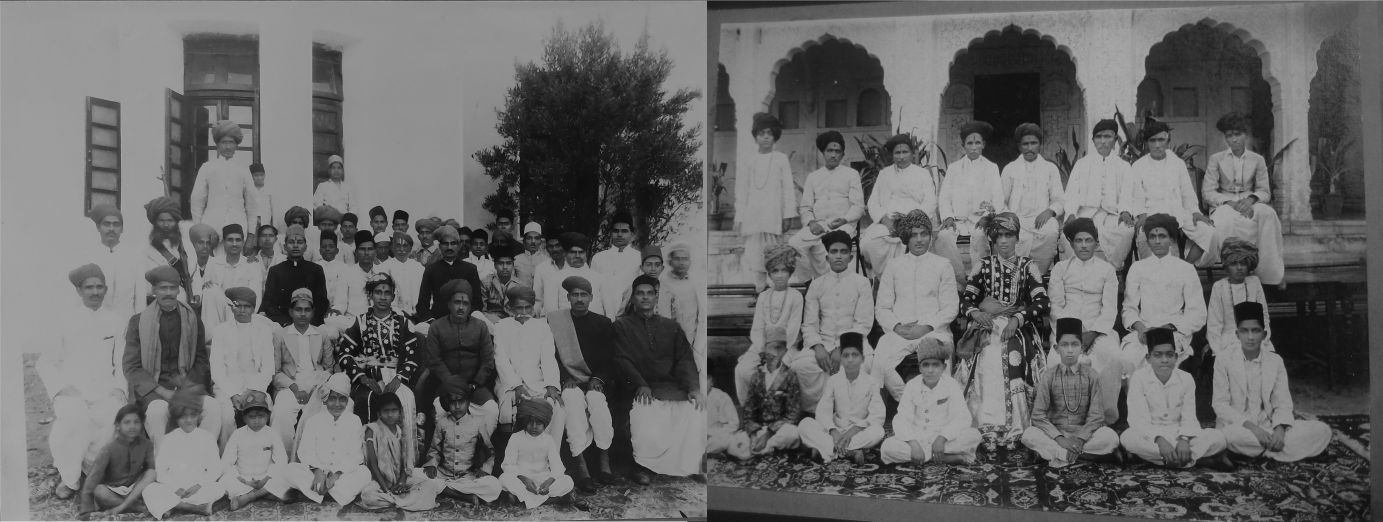
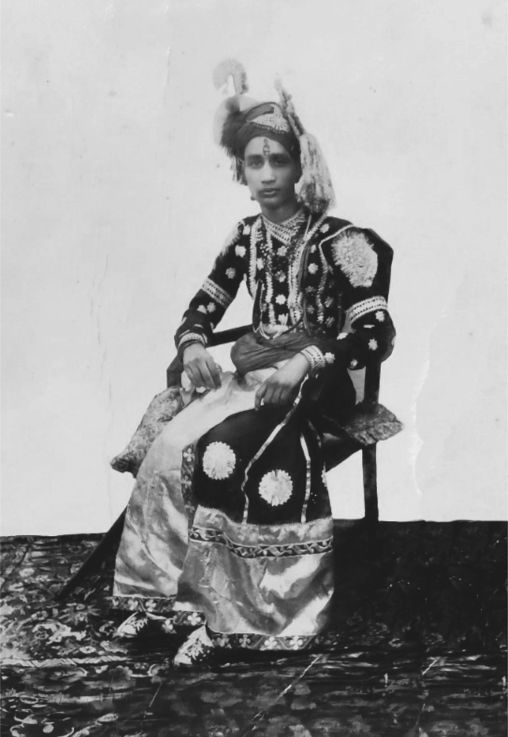
The preparations for the marriage took place with great fanfare on both sides. Unlike today's times, bride's family were not to be called. There used to be a baraat of 150 to 300 people from the boy's side, in which men and boys of the whole family, Relatives, family friends of the whole village and pandit, servants and barbers used to go. Women would not go. There used to be a whole convoy of bullock carts, buffalo carts, camel carts etc. A modest procession of 400 members of the Taparia family reached Didwana carrying Shriram, who was first given the title of बनड़ा 'Banada' (groom) and then बीनराजा 'Beenraja' and adorned with a shining strap on the forehead, Safa, बागा Baga and sword. The hospitality of the baraat was accomplished wonderfully. Serving them affably happened so many times that the baraatis remembered it for lifetime. After enjoying merely four days of hospitality, the marriage procession returned with the bride after solemnizing the marriage. Later on, Bhaiji did not like the name Godavari, so her name was changed to Suman.
ADULTHOOD
After completing his BA, Bhaiji began working in the family’s Textile business under the supervision of Dadaji Laduramji. The story of how Grandfather expanded this business into a vast enterprise is both fascinating and inspiring—you will read about it later.
At that time, Bombay was the most modern city in India. The British had transformed this asset, received as dowry, into a hub of every comfort and facility that had been invented in London. In industry, trade, entertainment, population, education, and also in देशभक्ति National consciousness, Bombay surpassed all other cities. It was both a city of work and of indulgence.
Naturally, along with work came enjoyment -wearing suits and boots, visiting clubs, cinema, picnics, restaurants, and more. But whether it was divine grace, Dadaji’s commanding presence, or the values instilled by Pandit Ramakantji, not a single member of the family fell into any bad habits, addictions, gambling, or unhealthy lifestyles, despite living in Bombay and being away from the watchful eyes of their Elders. Perhaps it also helped that the youth group of the extended family mostly socialized within the family itself.
Every youngster eagerly looks forward to driving a car before turning eighteen, and Bhaiji was no exception. Dadaji had purchased a large ambulance make vehicle in Jaswantgarh. In his view, a small car simply didn’t fit the stature of the family. A driver named Kisanpuri was hired for it. But Bhaiji couldn't resist and began trying his hand at driving. Whether or not Dadaji knew of this remains unknown to date. However, the skill required to maneuver a vehicle through the narrow lanes of Jaswantgarh was still lacking—and what was bound to happen, did happen. Bhaiji accidentally drove over a Jodhpuri stone Patti lying in a lane and broke it.
The owner of the Patti promptly brought the complaint to Dadaji. On hearing it, Dadaji flared in rage. He summoned Sirirama and, scolding him in front of the complainant, said, “Sitaramji (the accountant), hand over Sirirama to the police immediately. Today he has broken a Patti—tomorrow he might crush a person!”
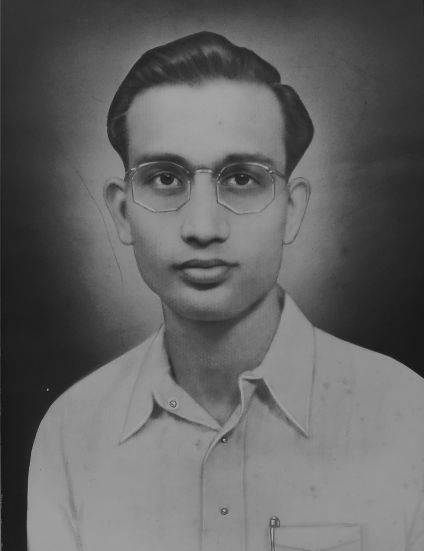
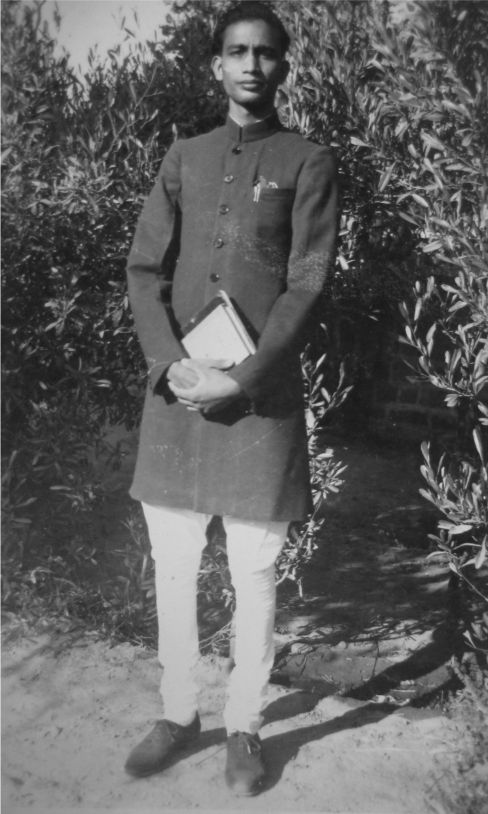
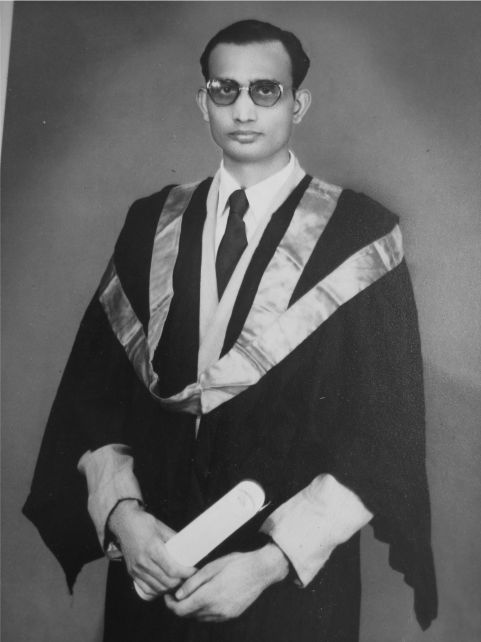
The complainant was stunned by such extreme punishment for what he had considered a minor offence. He had only expected a few scolding words and compensation for the broken Patti. Now he began pleading for leniency : “Let it go, Sethji, he’s just a child.” But Dadaji was adamant: “Is this how things should be? Take Sirirama to the police station.”
Now the complainant found himself in a fix. If Seth Laduramji’s grandson was actually arrested for breaking a stone patti, the entire village would blame the complainant and shame him. With great effort, he finally persuaded Dadaji to forgive Bhaiji. Whether he took compensation for the patti remains unknown. In this way, Dadaji taught Bhaiji an important lesson about accountability and the responsibilities of maintaining social relationships.
After Dadaji passed away, the entire family moved from Jaswantgarh to Kolkata. Thanks to their hard work and foresight, the business began growing rapidly—day by day, year by year. It wasn’t that competition didn’t exist. It was said that, if necessary, they would even sell goods at cost price. Sometimes, the profit came not from the goods themselves, but from selling the very Jute packing of the गाँठ.
At that time Bombay was a major centre of textile manufacturing. Dhotis Sarees were distributed all over India from there. The Taparia family also used to buy from Bombay, from the mills, through brokers. Dadaji felt that if one member of the family stays in Bombay and makes purchases, it would be great advantage. Seeing Bhaiji's ability, he was ordered to shift to Bombay. Bhaiji Bhabhiji shifted. He availed a place in Sheikh Memon Street in Zaveri Bazar, in Bombay, by paying pagdi. The office in front was called Gaddi or pedi and the 'kholi' for living in the backside. 'Basa' was set up which meant a common kitchen for all the Accountants, Gumastas and also Owners of pedi. In the pedi, the accountant used to sit cross legged on the mattress from morning till late evening with a big pillow in front of him and would write accounts. At night, all the accountants used to sleep in a row on the same gaddi and used to manage with a common bathroom for Employees and Employer.
Everyone must have noticed the benefit of coming to Bombay. Therefore, gradually almost all the entire Taparia family, which had settled in Calcutta, started coming one by one to live in Bombay. At first, more pedis opened in Zaveri Bazaar. Then slowly the living area got separated from Pedi. Residence was first Marine Drive, then Nepean Sea Road and then more places. The family was also growing rapidly. Each member of the generation of Dadaji's sons increased the genealogy totally to 15 Grandsons. The Work which was once a joint Business of all the four Dadajis got separated too. The Textile trading Business made everyone very prosperous and the standard of living also increased accordingly. This was contrary to the ideology of Laduramji but he gave some relaxation to the new generation looking to the demand of that time. This was the financial golden age for the extended family.
After coming to Bombay, Bhaiji felt that knowledge of Law was very useful. So while looking after the Work, he enrolled himself for LLB in the morning session at Wilson College Chowpatty.
TRADE AND INDUSTRY
For some period, the entire trade was in textile. Earning was also good in that.
Bhaiji became a member of CCI ( Cricket Club of India ) because of his passion for cricket. Bhaiji got introduced to Marwari, Gujarati and other elite societies of Bombay. In their accompaniment, Bhaiji sensed that trading will remain trading. It can never compete with Industry. If one wants to rise very high, one has to step into Industry. He used to oversee the work of textile mills every day. He was also friendly with Mill Owners. Money was raining in business and family had the ability to invest money. So persuading Dadaji, Bhaiji made the family step into industry. There was a 'Suryoday Mill' in Tardeo, which was lying burnt to ashes due to a major fire and was lying closed. He acquired it, renovated it and restarted running powerlooms.
Then came a new idea that Calendering was the cheapest process of grey cloth in great demand. Many Marwaris had started doing powerloom work, at big powerloom centres like Bhiwandi, Ichalkaranji etc. They had to beg the Textile Mills for the process of calendering. This supply Demand gap was filled by starting Calendering process in Suryoday Mills Tardeo by the name 'Bombay Textile Mill'. The responsibility of handling that was given to Harnarayanbhaiji. Orders flooded in as soon as the first machine was installed. So, the second machine was installed and then the third. This went on and five machines were installed one by one. Bombay Textile Mill became the world's largest calendering processing house where there was processing of 5.5 lakh metres per day in all three shifts. Despite this, the Traders used to rush and pressurize for the processing of their Goods during the peak season.
As the entire space of Bombay Textile was filled with Calendering Process, a large piece of land was taken in Bhandup and the powerlooms were shifted there. Bhaiji gave the responsibility of taking care of that to Jagdishbhaiji and Jaikrishnabhaiji.
The finance work of the entire group was given to Lakshminarayanbhaiji. Instead of looking after all the business and industry himself, Bhaiji had entrusted them to the younger brothers. He himself used to remain engaged in long-term and futuristic plans.
Bhaiji started the next business, Permanent Magnets Ltd. This was also a sick company which was established by Shri Kantibhai Desai, son of the Chief Minister of Mumbai, Shri Morarjibhai. It had collaboration with Italy and had the technology to make magnets. Kantibhai sold it to Shri MadanMohan Ruiaji but it did not work well even with him. The family gave approval and in 1960, Bhaiji bought PML and started running this company. Bhaiji himself looked after it for many years. It had good earning in that too. Later, that too was handed over to younger brother Shyamsundarji.
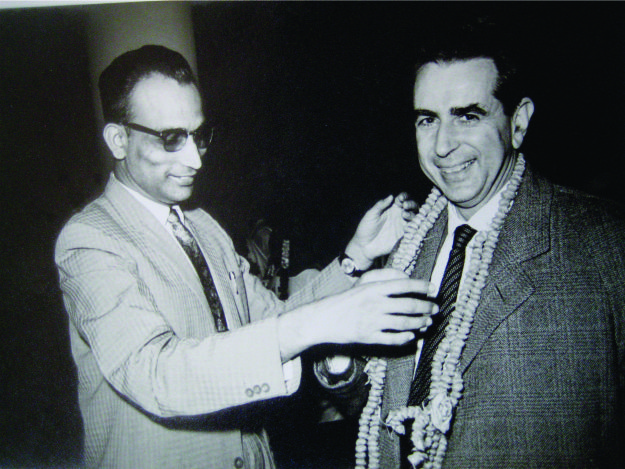
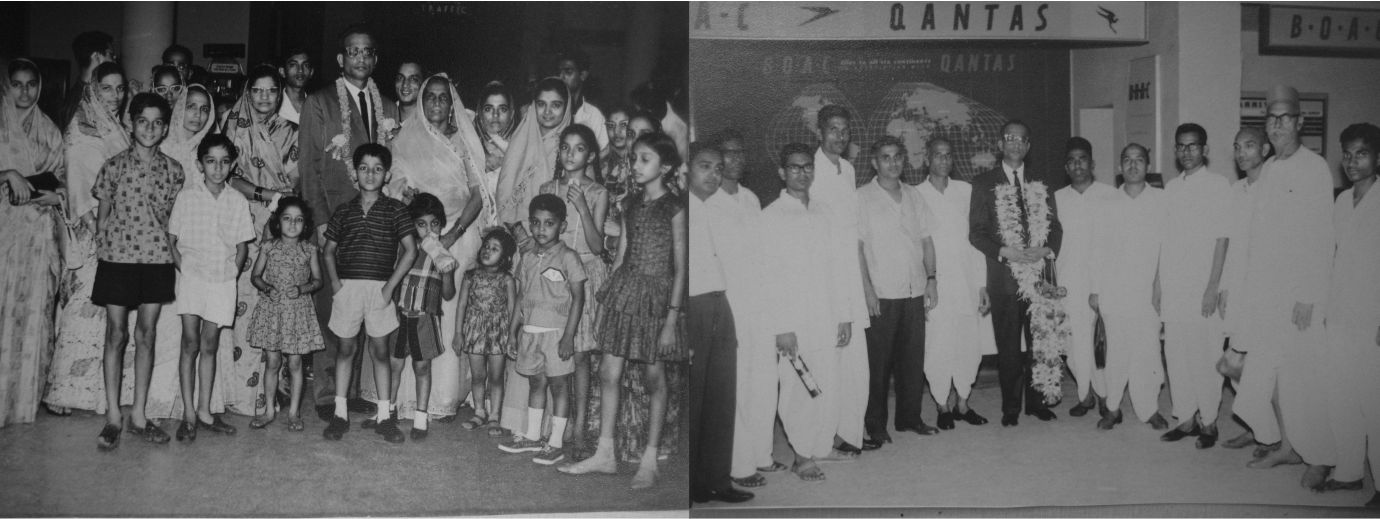
The talk of the third industry came when younger brother Shyamsundar passed B.Tech Mechanical Engineering from IIT Kharagpur in 1960. After completing his studies, Shyamsundarbhaiji took 12 months training in Baholzer company, Germany. At the same time, Bhaiji planned a World Tour to find another new Industry. In those days travelling abroad was considered a big event. It might happen once in a lifetime. Therefore, a mixed program of business and tourism was made. Tourism is not something that can be done alone, so it was decided to take Bhabhiji along. But how could she be taken on family's expenditure? So, she travelled with him on the basis that her ticket and extra expense whatever will be incurred on her personal account. In those days the clocks did not run as fast as they do today. If you wanted to see the whole world, it would take many many days. So, both the tourists did the world tour in a reasonably 'short' period of four months. They enjoyed visiting Countries like Athens, Milano, Germany, France, Holland, England, Sweden, Norway, Canada, San Francisco, Honolulu, Japan etc. While buying foreign things, he also bought some gift for every person of the big Taparia family.
Shyamsundarbhaiji met him in between this trip and they together discussed about collaboration with many foreign companies. Finally, the collaboration agreement for manufacturing hand tool with Swedish company Bahco was finalized. In 1967, Bahco Taparia Tools Ltd., later renamed as Taparia Tools Ltd., started at Nashik. In the beginning, both brothers were engaged in TTL, but it was becoming too heavy for Bhaiji, so PML was handled by Shyamsundar Bhaiji and TTL was handled by Shriram Bhaiji. Later the youngest Jaiprakash completed his B Tech and he was also placed under Shyambhaiji in TTL as subordinate.
Bhaiji's management style in the industry was unique. He considered all the senior junior employees under him as his family members. He used to participate in their personal happiness and distress (sukh-dukh). Solved their personal problems. For this reason, everyone had such deep respect that even if someone left the job, he would maintain a lifelong relationship with Bhaiji.
His style of solving the problems of the industry was by conducting a Durbar style meeting with everyone and arriving at a consensus. It was a long drawn process, running for hours in which everyone used to get tired but Bhaiji would not show any sign of tiredness. Meeting going upto 10 or 11 o'clock at night was very common. Snacks used to come from home for every participant. Finally those who used to disagree with some decision till the very end also joined the consensus out of respect or tiredness. That meant that the dissenter also accepted the majority, withdrew his dissent and move ahead by building a consensus.
He also had a unique style of solving labour problems. Firstly, he would hold many a long meetings many a times. Mantra was , even if no solution comes, the talks should not break down. It did not matter who was right and who was wrong. Bottom line was to settle. If someone became adamant with a very illegitimate demand, then he would convert their demand as less illegitimate as possible and then accept it. The situation of strike or lockout was not allowed to arise. Labourers losing and forced to give up their demand, was not in the interest of Management. Rather they should feel that THEY had won. He used to tell a story to explain this philosophy.
Guests are expected to come to your house for a meal and they like brinjal very much. Your wife hands over the bag to you to bring brinjals from the market. Since brinjal was unseasonal at that time, they were very less visible. The prices are also too high. Now you have to decide. Whether to buy brinjal at an unreasonable price or not. But where was the option for you not to buy? Time was also limited. After doing drama for a limited period, you have no choice but the buy at whatever possible negotiated price of the brinjals and return home.
The family was getting bigger. Many members had joined the business. There comes a time when many family members take up the same Business, same responsibility. Then their self-development gets hampered. Sensing this, Bhaiji started making the brothers independent in work. Laduramji's three sons had fifteen sons. They separated one by one and some became small groups of different companies. Although the process of separation was not that easy, but Taparia family was fortunate that ultimately every separation was accomplished without tension by the mediation of the Elders of the family. The credit for this goes mainly to the Elders of the family. Bhaiji played a major role in those Separations . Credit also goes to those members who gave more importance to family love and harmony instead of sticking to 100% so called justice. Today, the whole Jagannath Taparia family i.e. the family of all the four grandfathers is tied in such a strong bond of love that it is a wonderful example towards the society. Money is necessary for happiness, but if there is no love within the family, that happiness gets destroyed inspite of shower of money.
With the separation of businesses, the homes also got separated and increased too. Today, the Laduramji family has about 20 flats in Bombay.
HOBBIES AND ENTERTAINMENT
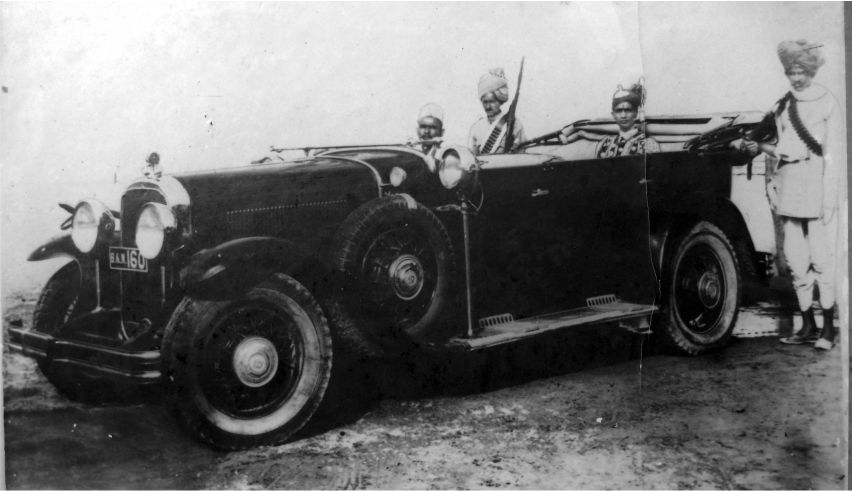
Bhaiji was always fond of new things. He was the first to buy everything new in the family. Car (1953), Automatic Gramophone Radio with stack of 8 Records (1955), Tape Recorder (1963), Cassette Player (1972), TV (1966), Camera (1951), Video Camera (1961), 8 mm Projector (1963), AC (1959), Washing Machine (1965), Flour Grinding Mill (1964), all these things with new technology were brought first in the house by Bhaiji. The imported car Chevrolet (1967) was also a symbol of luxury in those days.
Bhaiji had huge passion for cinema. Hardly any new cinema would be missed. It was also common to watch the same movie 5 or 10 times. He made a record of watching 100 movies in one year. He used to watch Dramas too.
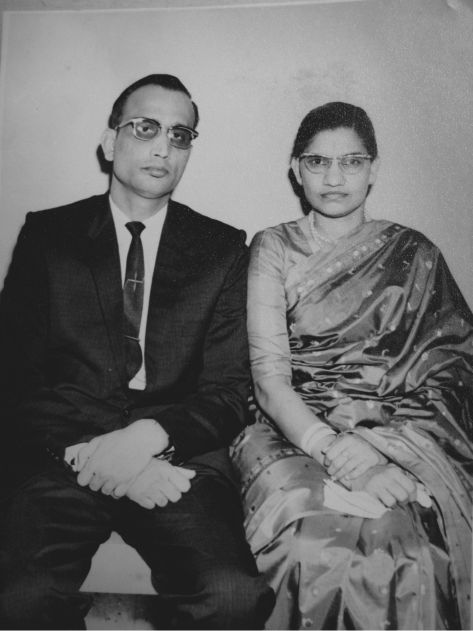
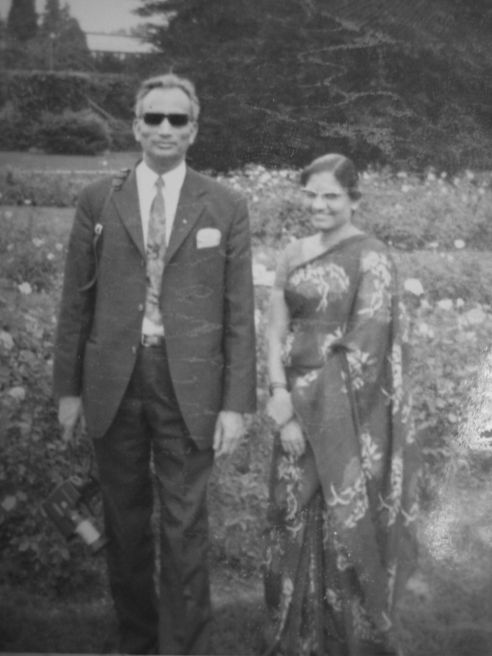
Every Sunday, Men in the family used to play cards at home from morning till evening with peer group in the family, among them Ghanshyamkakaji, Dungarkakaji, Bajrangkakaji, Mahavirkakaji, Gopalkakaji, Madanbhaiji etc. were the main ones. Sweep was the only card game played for years and years. But there was always a ban on playing with stake money. 78 rpm record of songs by Sehgal, Pankaj and Lata Rafi Mukesh would keep playing throughout the day. Unwllingly, we little kids listened to those songs so many times that every line and melody of those songs got engraved in our hearts like the groove of a record.
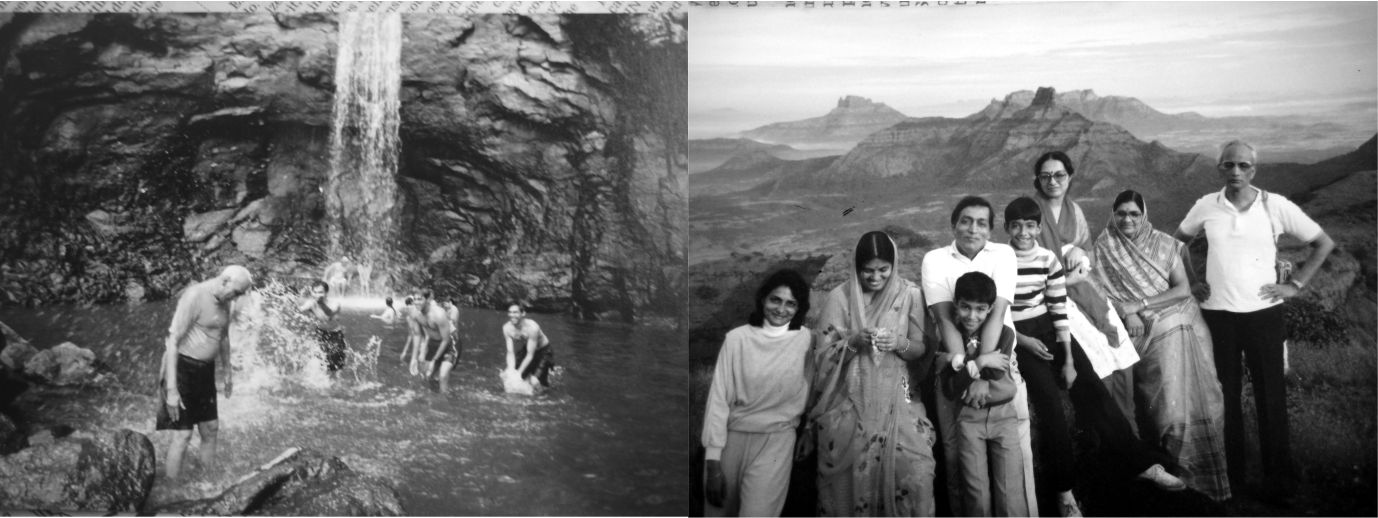
In those days, there was a craze for picnics which has ended nowadays. There would be a day-long picnic something like 12 times a year. There were picnic spots near the lakes outside Bombay, such as Vaitarna, Tansa, Vihar, Tulsi Powai. Apart from these, Juhu Beach, Aarey Colony etc. were also there. It was a custom to go in jam-packed cars singing Sehgal Pankaj songs. It was common for 12 people to go in an ambassador car. After going there, all would sit on a mat and play cards or chit-chat. Games like khokho, handkerchief thief etc. were played. On feeling very hungry, used to eat home-brought snacks like mango sandwiches etc.
Some picnics were held 5-7 times a year, where nights were also spent outside, like in Mahabaleshwar, Panchgani, Lonavla, Matheran, Khandala etc. Cooking one's own food there, was also part of the fun.
Bhaiji himself played very few Sports. Might have played volleyball at young age at Jaswantgarh. But he was very fond of watching cricket in Bombay. In those days, Test matches of 5 days were held in Bombay in CCI. By purchasing the tickets, a picnic-like atmosphere was created throughout the day. He used to carry tiffins stuffed with food for everyone. The fondness for cricket remained till the end. Although, later he shifted to watching only on TV.
He was deeply fond of music. Programs of classical music as well as programs of film songs. Till the end, it was a habit to purchase music cassette tapes and CDs wherever seen even if he would hardly get time to listen to it later. He himself was very fond of singing. Many times, Sangeet Sandhya were held at home where Bhaiji did not need to be coerced to sing. He had got his special favourite bhajans , Marwari songs, patriotic songs typed and distributed those copies. He gave a lot of encouragement to Vimleshji , the top poet of Marwari poems, and organized a Baithak of poetry at home.
The same thing was applicable to books. Like a Sharabi he could not resist buying whenever he saw a Bookstall. The entire room in the office at home was made into a library of books. He got time to read some of those books, and for others did not. The library was full of Premchand, Sharatchandra literature, Rajasthani literature, poetry, film songs etc.
First came the Era of 75 rpm Records. Then 45rpm records. Then 33 rpm records. Huge number of records were bought. Then came the era of Tape recorder and then came cassettes, Large collection of cassettes was bought. Then came the era of CDs. Many CDs were bought. Bhaiji's office was a huge library of all these purchases.
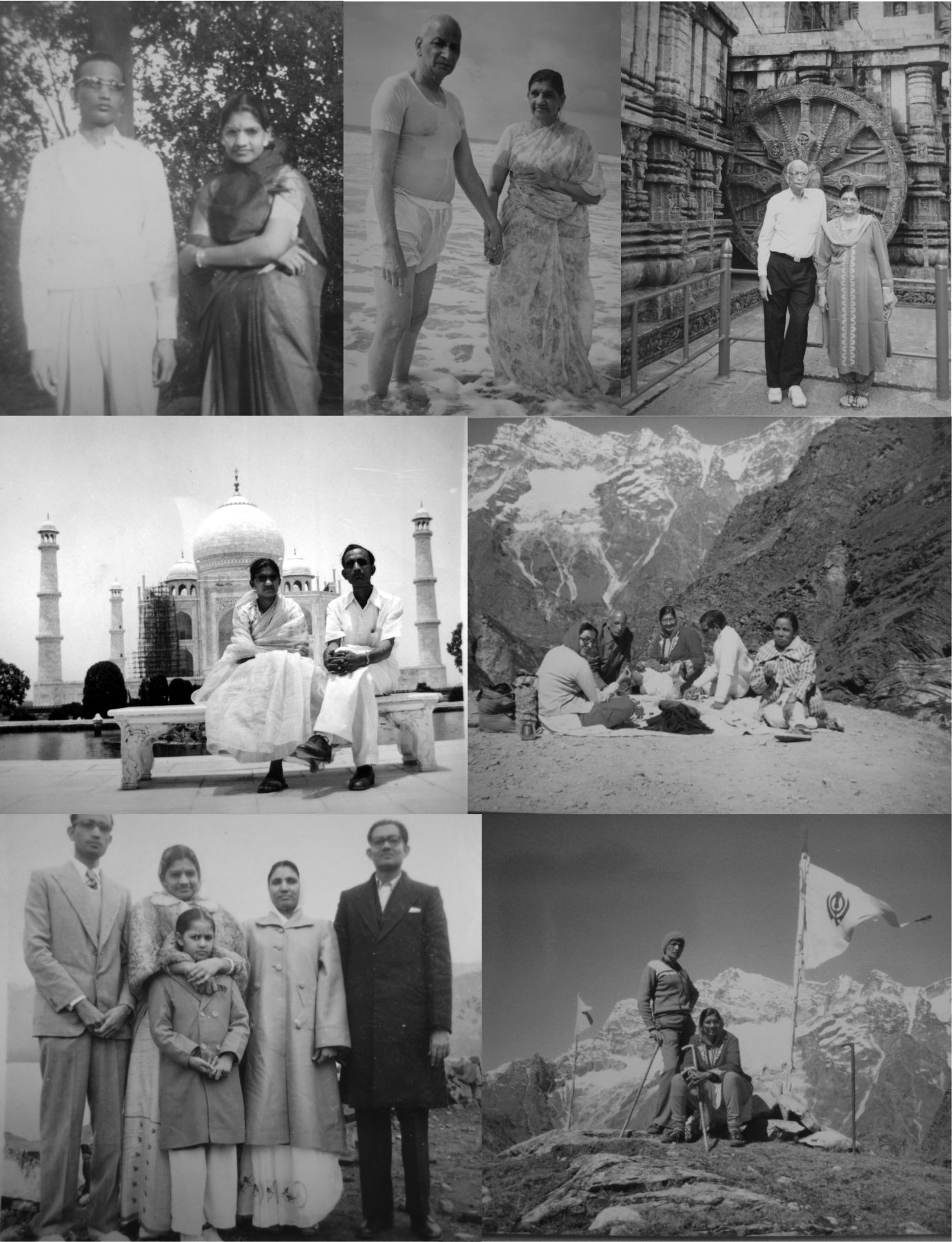
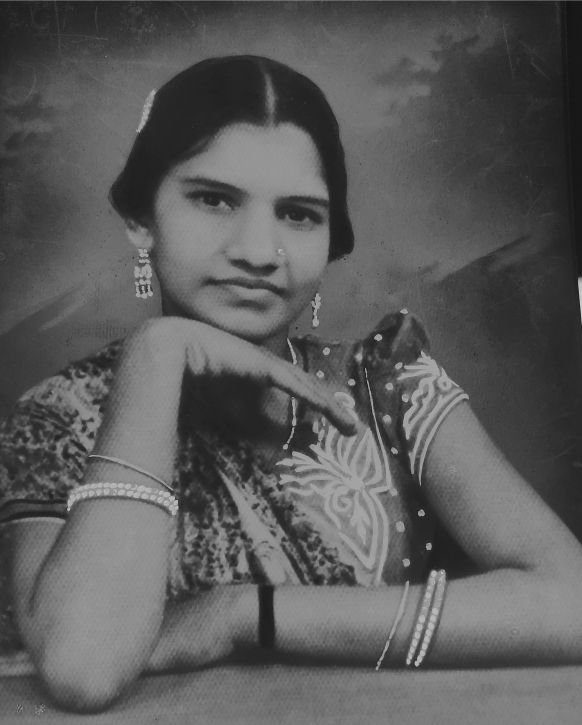
Fondness for travelling was no less. Bhaiji took innumerable trips, some with Bhojaiji and some with small and big groups of family members. Brij Yatra with Dadaji, Dwarka with Bapuji, Somnath, Ellora Ajanta, Vrindavan with mother, Tirupati and temples of South with Jaiaprakash, Chardham Yatra with sisters, brother-in-law Jaiprakash-Chhaya. Dalhousie, Kulu Manali, Nainital Ranikhet with Bhojaiji. One month in Kashmir's Srinagar, Gulmarg, Sonmarg etc. Five days in Burma where he did Vipassana too under Guru Sayaji U Ba Khin. He travelled to Hong Kong, Thailand, Poland too.
Bhaiji used to enjoy good food too. There was no vow not to eat anything whether sweet or salty or even junk food. He would eat everything but in limited quantity. Bhaiji did not like modern food like pizza, pasta, burger etc. but would eat a little to show respect to the offer from children. He was a great connoisseur of taste of Indian food. He could give a full detailed explanation on what was right in taste and what was lacking. Marriages used to be solemnised very frequently in Taparia Larger family. He would hold a long discussion with the cook (maharaj) about each and every item on the menu. After the program, he would taste to give quality feedback too. Bhaiji did the job of restoring the glory to many old outdated Indian sweets. Which almonds to be used in Badam Katli? How to soak, how to grind, how to bake and cut into what size. How thin should the rope of Jalebi be, what should be its size, how strong it should be while frying, how much saffron and cardamom should be in the syrup. I have seen the cook being trained on how to spread pistachio and serve it. It will not be an exaggeration if it is said that he is the Inventor of the theory that adding saffron and Cardamom in anything and everything increases its taste and flavour.
It was very important that the food be not only simple and healthy but it had to be tasty too.
Bhaiji's message to all the housewives of today was that instead of eating outside food, insist on feeding at home. Cook healthy food but make it so tasty that the family does not miss outside food. Even Junk food should be healthy !!!
Bhaiji himself never wore ornaments but he had complete knowledge of ornaments and took full interest in getting ornaments made for the family members. But, Bhojaiji's knowledge in this matter is far greater than him.
Overall, Bhaiji enjoyed all the worldly pleasures that were available at every point of his time, but at the same time this mantra of Ishopanishad was imbibed तेन त्यक्तेन भंजीथाः 'Ten Tyakten Bhunjitha' ( Enjoy it with detachment ) in his life.
DADAJI LADURAMJI
Although this memoir is about Bhaiji, it is appropriate to mention something about Dadaji Laduramji in the meantime because if anyone has had the biggest impact on Bhaiji, it was Dadaji.
Great grandfather Jagannathji who established Jaswantgarh village was a personality with great self- respect, but he did not have Business accumen. He accumulated a huge debt on his head due to his addiction to सट्टा (speculation). There was no means of earning in the house with four children. Jagannathji passed away with the eldest son, Laduram, at the age of 14, having to bear the responsibility of repaying this debt, and maintaining his own family and families of his three younger brothers, Shivchandrai, Surajmal and Ganpatrai.
Where the whole of Rajasthan was backward, poor and suffering from famine, the scope of business in the small village of Jaswantgarh was negligible. But when the responsibility falls on ones Shoulder, it brings out the hidden talent of a man. So, Dadaji Laduramji thought and concluded that earning would be possible only by going to 'Disawar' ie far distant Places. So he made भीष्मसंकल्प ( Resolution ) known to family that जद ताईं कर्जो नई उतार द्यूँ बड़ तक पाछो कोनी बावड़ 'Jad tani karjo nai utar dyun bad tani paachho koni baavdu' (I will not return until I repay the debt.)
Laduramji rided a camel to reach Merta and then by train to Delhi, then from Delhi to Calcutta, then from Calcutta to Assam. After a very long and difficult journey, young Laduramji reached Dibrugarh, a city in Assam via Calcutta. Some 200–250 years ago, many Marwari entrepreneurs like him had left their native land forever, stayed in remote towns of India and had permanently settled there. When their bretheren from Rajasthan arrived there, they would assist them in starting a business. And in this training process, he would get his reliable assistant too. Laduramji was also given a job in a cloth shop by some Agarwalji. He expanded the owner's business a lot on the strength of his own common sense, intuition, speculation, reliability and hard work in the job. After paying off his father's debt five years later, Laduramji took a leave of absence and went back to Jaswantgarh. Dadiji Surjudevi ensdured the pain of separation in her youth to herself and took care of the house and the children during this long period. There was neither the custom nor the expectation to acknowledge this great तपस्या ( penance ).
When it was time for Laduramji to go back to work, his mother was enraged noticing his frail body and said that she would not send him to Assam come what may.
There is a town Nokha near Jaswantgarh. One Ramchandraji Tapadia of Nokha was convinced of Laduramji's talent and honesty. He was convinced that this boy has potential to start his own business. But from where would the money for the work come from? Ramchandraji spoke to one Seth Kanakmalji Lodha, a well-known person from Sujangarh, to think of a textile business in Calcutta, in partnership with Laduramji Taparia family which would be overseen by Laduram. The entire investment of money would be Kanakmalji's, but the partnership would be 14:2. Lodhaji asked “ what if there is a loss?” Ramnathji had so much faith in Laduram that he gave a personal guarantee against loss. The matter was settled and Laduramji left for his new work-worship place Calcutta at an auspicious time.
The business flourished and flourished with great vigour and Laduramji became famous in Calcutta as a highly skilled businessman. Lodhaji was also very happy with his partner. Laduramji proposed increasing his share which Lodhaji accepted willingly. In increasing that share, Laduramji Dadaji also got the partnership for his three younger brothers. Gradually, the share of Lodhaji started decreasing and that of the Taparia brothers kept increasing. Finally when Kanakmalji passed away, the entire business came into the hands of Taparia Family.
Laduramji's heart was huge. The scope of his kinship was not limited to himself and the entire family of his brothers. The entire Jaswantgarh village was his own. Countless families flourished, succeeded, or emerged from hardship under his shadow like a huge banyan tree. He called his three younger brothers one by one to Calcutta and engaged them in partnership with him at first and then established them independently. The next generation was also motivated to work after that. Everyone imbibed his principles of work and therefore the reputation remained in the market, in the society and also losses were avoided.
At the time of Dadaji's death, the splendid manner in which all the villagers bid him farewell, that itself is a reflection of his personality.
TAPARIA FAMILY
By the grace of God, Jagannathji Taparia's family grew and increased to about 150 members. Adding sisters, daughters, nephews and nieces, the count might reach about 350. Most of them sooner or later settled in Bombay. The culture which was inherited by everyone from Dadaji Laduramji i.e. the initiatives to spread the scope of kinship to the whole family and make active efforts to keep it alive was thought by elder brother and his peer uncle and brothers together. Some of the notable ones are these:
- On every occasion of happiness or sorrow, every family member would not only be present but would also willingly take responsibility for the duties assigned.
- Family members met regularly. Every Sunday, they gathered for a card party, which later evolved into a monthly gathering known as MILAN (मिलन).
- The family organized picnics several times each year to strengthen relationships and spend quality time together.
- Everyone gathered in Jaswantgarh village once or twice every year on various occasions. Earlier, the entire village celebrated the famous सावन का झूला (Sawan Swings) festival in its temples.
- The family also enjoyed holidays together at the end of December. Today, this annual gathering is celebrated on 25th February during the Patotsav festival at the Lakshmi Temple.
- Whether it was the infinite grace of God or the greatness of Dadaji's heart, the four branches of the family have remained united with love and harmony for more than a hundred years. Family members continue to support one another during celebrations, sorrow, marriages, difficult times, and even in business matters.
- Inspired by this tradition, the younger generation launched a grand event every four years called the Taparia Yuva Jaswantgarh Meet (TYJM). This gathering has played a significant role in strengthening the bond among children and youth of the extended family.
- As part of these family initiatives, Bhaiji also organized a special gathering of Laduramji's family.
- All four grandfathers jointly initiated numerous projects for the development of the village. Every year, the entire family voluntarily contributes towards these charitable activities. These initiatives continue to grow, evolve, and provide opportunities for family members to meet, interact, and work together for the welfare of the community.
The example of such a joint initiative of such a large family is hardly to be found anywhere.
An old tradition probably existed in all the provinces in India. If the paternal aunt(bhua) or sister or their sons and daughters were in a financially difficult condition or were engaged in work in such a place that their children were not able to study there, then their children used to grow up in maternal grandparent's house (Nanihal). On the other side, every young couple in the family was engaged in the virtuous work of increasing the population of the family and India with their full potential. That is why addition of nephews and nieces भानजा भानजी in the army of one's own children hardly mattered. Laduramji Dadaji established the same tradition in the family. He invited Bhuwaji's sons/ daughters, sisters' sons/daughters, and daughters' sons to stay, grow up and study in our house. They were not only brought up but were also later employed in work.
After Dadaji, Bhaiji carried on with this tradition through and through. Sister, brother-in-law, nephew, niece, Bhuwa's sons and daughters remained in Taparia family for years and he also got them engaged in work. Today those children and their children are standing on their own feet and are very prosperous, but they still cherish the sweet memories of Nanihal and consider themselves as integral part of the Taparia family.
Bhaiji with his own and paternal uncle's sons fully enjoyed various means of merriment, picnic, playing cards, pictures etc. with their uncles, due to which mutual relations became unbreakable.
Someone told Bhaiji that a factory named Supreme Industries is for sale in Wadala. The Business in the Laduramji family had increased a lot, so Bhaiji felt that it would be right to share this offer of factory to the family of younger grandfather Surajmalji. He urged Bajranglalji and Mahavirprasadji Kakaji to buy this factory. He also assured that if there is a shortage of money, then he will find a solution for it also. The factory was taken over. Due to Kakaji's untiring efforts and understanding, today Supreme Industries has become a leading company in plastics. Kakaji still does not get tired of praising that small initiative of Bhaiji.
Father Hanumanbagasji was not educated. So Bhaiji was the anchor point in the marriages of all his brothers, sisters, their sons and daughters, even their grandchildren. From finding an alliance to getting the marriage solemnised, Bhaiji used to get immersed in the task. He believed that in an alliance, in addition to seeing the boy or girl, it is very important to know the family's culture, food habits, thoughts and nature of the parents very well. Knowing that one can predict what culture, nature the boy or girl would inherit and show up in future. Family culture can be sensed by going to each other's house, having food. It helps to judge whether culture of both the families match or not. That information cannot be found out if the meeting takes place in a hotel. Bhaiji used to do intense investigation for that. He would search out people who have known the people of the family closely for years. If possible, he would find out more than one such person. Being engaged in social work, he used to find such trustworthy people in every city.
His style of leadership was to first engage yourself into work and then engage everyone.
Young children were VIP for Bhaiji. Fulfilling their demands was paramount. He would go with them to buy something by taking them to the corner of the lane. He would become a character in their drama. At home, Bhaiji would become a child among the children. Their wishes which were not fulfilled anywhere else were fulfilled by the सर्वमान्य (undisputed) Papaji. A small child could suddenly pull his finger to take him out from a very serious meeting going on at home. The meeting would be adjourned for some time. He had brought an 8 mm projector from abroad long back, on which we all used to watch comic films Charlie Chaplin, Laurel Hardy etc. while sitting in the home theatre and rolling with laughter. Once the children dressed and paraded him as Santa Claus.
Sometimes calamities occur in a big family. Bhaiji was the trouble shooter of every calamity. Only Bhaiji knew the long list of many personal confidential problems of people which came up and many of them were solved. He frequently contributed to help someone in financial difficulty on his own without telling anyone.
Bhaiji used to inquire about the personal and family life of all employees from the lower level to big officers and also about their village. He used to give advice and help as needed. Because of this, every person had developed a strong fatherly respect for Bhaiji.
Bhaiji got introduced to many high renowned billionaires through industry, social work and CCI club. But he deliberately kept limited friendship with them. He had seen and understood that being more intimate with them could cause harm.
BHAIJI’S DAILY ROUTINE
Bhaiji's daily routine was like this. Getting up late between 8 and 10 in the morning, when sleep is complete. Getting enough sleep was a major part and reason for Bhaiji's excellent health. By the time he completed his routine which included asanas, pranayama, massage and breakfast, it used to be 11 am to 12 pm. Then began a long process of work. Bhaiji's office was adjacent to the bedroom. So, there was no time limit, even if it was 1-2 in the night. Bhaiji never worked on computer himself but knew how to get the work done. Ganesh Mahto typist for computer work and Santosh Jha for other office work. Perfection in drafting was Bhaiji's passion. He would initially give hand written notes. After that a long continuous process of correcting the typographical mistakes. It was normal to take final printout after fine-tuning the draft four to five times.
Even though everything was in the computer, Bhaiji preferred to depend on paper records. For this he had a huge systematic filing system. It was world famous that if any paper comes in Bhaiji's huge compilation of (सुमेरु पर्वत ) record, it will definitely be found in Bhaiji files even after 20-30 years.
PARTITION OF FAMILY
As the family grows, they have to be divided into smaller parts. This process of separation takes place at three levels.
- Financial separation i.e. calculating each one's share in earnings
- Separation of homes ( LIVING )
- Separating of Business
Separation of brothers has been happening in the world. Every family has to go through this process, but most of them do not have the experience and understanding, i.e. wisdom that is necessary to do this delicate process at the right time, in the right way. The irony is that parents don't even understand that I don't have the kind of understanding needed for this. The result is that it is rarely done at right time. The cancer spreads and then the surgery becomes necessary.,It bleeds a lot, organs have to be amputated and the wound remains for life.
Bhaiji had gained a lot of profound understanding of this process from the experience of his Elders, Relatives and families of the society. On the basis of his experiences, Bhaiji deduced the principle that if the need for separation is being felt, then it means you are too late. That means, now this process will be difficult. It will not happen with love, with peace. Only that separation is timely, where the need to separate is not felt at all. Where tears of love flow at the time of separation and the feeling is not of relief. It is an important duty of every father to separate his sons in his presence without any felt need. Separate first financially, then arrange separate living and then separate the Business too. He should sense that tension can start in the future. Bhaiji used to explain this theory to Family members wherever he saw the right occasion.
Laduramji Dadaji first separated his three brothers. After that, the homes of his three sons. But the work of all three was collective. Now it was the turn of our father and both the uncles to separate the work of their 15 sons. But this work was done by Bhaiji with the help of uncle. It took many years.
Bhaiji also raised the issue of we seven brothers being financially separated at a time when there was no such question at all. I, the youngest one, had not even completed my studies then and did not even know the ABCD of separation. For me it was like child marriage. Although formally it was my father doing the separation but everyone knew that it was Bhaiji’s brain who was getting it done. The role in separating the family other than immediate family is one thing and it is very difficult to keep yourself fair and appear fair to everyone in a case where you are a stakeholder too. In this situation one has to bear some loss for himself and Bhaiji did that.
Finally, Bhaiji himself retired from business. He had planned that he would devote his entire time to Maheshwari Samaj, Jaswantgarh, family problems, Vipassana and charity work.
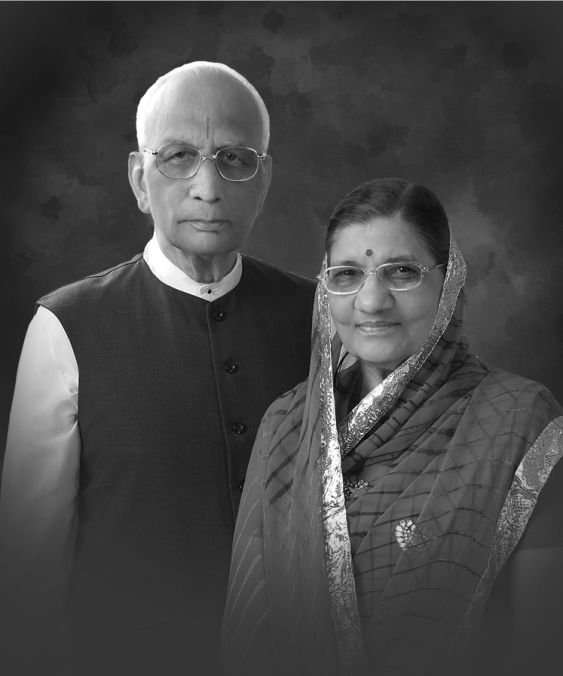
Bhaiji himself made an exception to this principle of separation in his own life. Despite being financially separated, Bhaiji, Shyamsundar Bhaiji and Myself (Jaiaprakash) i.e. the families of we three brothers spent their entire lives living in the same home.
MAHESHWARI SAMAJ
The Marwari Samaj of Bombay, which was mainly traders, was growing and the need was felt that they should mix together at the social level apart from business. For this, Maheshwari, Agarwal, and Oswal Samaj all established their institutions. Bhaiji was also attracted and became an active member of the newly established Maheshwari Pragati Mandal. Soon people recognized Bhaiji's leadership ability and then Mandal and Bhaiji became Radhamadhav for life. Mandal was rooted in Bhaiji's breath.
Every society has some active persons who are passionate about the need to carry out social service in full swing. The result of the same comes out. Bhaiji did a lot of social service work and also encouraged a lot.
A visionary, a sage is one who can see what is stored in future. Bhaiji minutely studied the upheavals and politics going on in Maheshwari societies and other institutions running all over India and thought profoundly about its root cause and removal. How the clash of human weaknesses especially pride and ego destroys the energy of institutions, how factions are formed and it becomes their goal to topple each other, how well meaning people get tired of Politics and become inactive in the organization. Those with political mindset dominate the organization. Bhaiji saw and understood all these. As a remedy of all these human related problems, Bhaiji formulated some very valuable effective practical measures/policies/principles.
- It is a fact that differences of opinion always exist. Although it is legally acceptable to run an organization based on majority decisions, doing so often leads to groupism and factionalism.
- Therefore, an institution should not function merely on the basis of majority. Instead, it should operate through consensus. Consensus means persuading every opponent to accept that, despite their differences, they are willing to move forward together in the best interest of the organization.
- Achieving consensus is not easy. It requires long and patient discussions while maintaining mutual love, respect, and understanding. Even if differences remain, those who disagree should ultimately be encouraged to stand with the rest of the organization.
- Genuine love and affection are essential for convincing an opponent. Mere pretence or strategic techniques cannot replace sincere goodwill. This feeling of respect and compassion should extend even towards one's opponents.
- Rapid progress achieved through majority rule alone has little value. Even if progress is slower, moving forward together while preserving harmony and unity is far more beneficial. The primary objective of society should always be love, harmony, and collective growth.
- The organizational structure should provide responsibilities and opportunities to as many people as possible. However, leadership should develop gradually. Elevating a newcomer directly to the highest position can disturb the stability of the organization.
- Senior and experienced members should serve as advisors and guides, while the younger generation should actively contribute as Karyakartas (dedicated volunteers).
- There should be Selection instead of Election. Even if it requires long meetings at every level, consensus should be achieved. If an opponent is created through elections, a significant amount of the organization's energy will continually be spent dealing with opposition instead of serving society.
- Bhaiji understood that prestige, fame, and public praise can become as intoxicating as alcohol. Therefore, he humbly declined every opportunity that brought personal recognition or status. After years of thoughtful discussion, detailed rules were framed to eliminate the pursuit of personal appreciation within the Mandal.
Bhaiji worked hard for years to make everyone believe in these basic tenet (mool mantra). Sprinkled cold water on impatience. Demonstrated how even a strong opponent can be persuaded. Only then everyone developed faith in these three pillars of the policy.
- Democratic Value
- Collective Leadership
- Unanimity in Decision
It took a few decades for the Mandal to imbibe this working style standing on these three pillars of the policy. However, there used to be occasional impatience among the Karyakartas. At the end, the entire Maheshwari society of India got to see a wonderful result, a wonderful ideal of this long process. Despite being India's largest organization with about 6000 members in Greater Bombay, the politics of Opposition remained negligible in Maheshwari Pragati Mandal. Even elections did not happen for years.
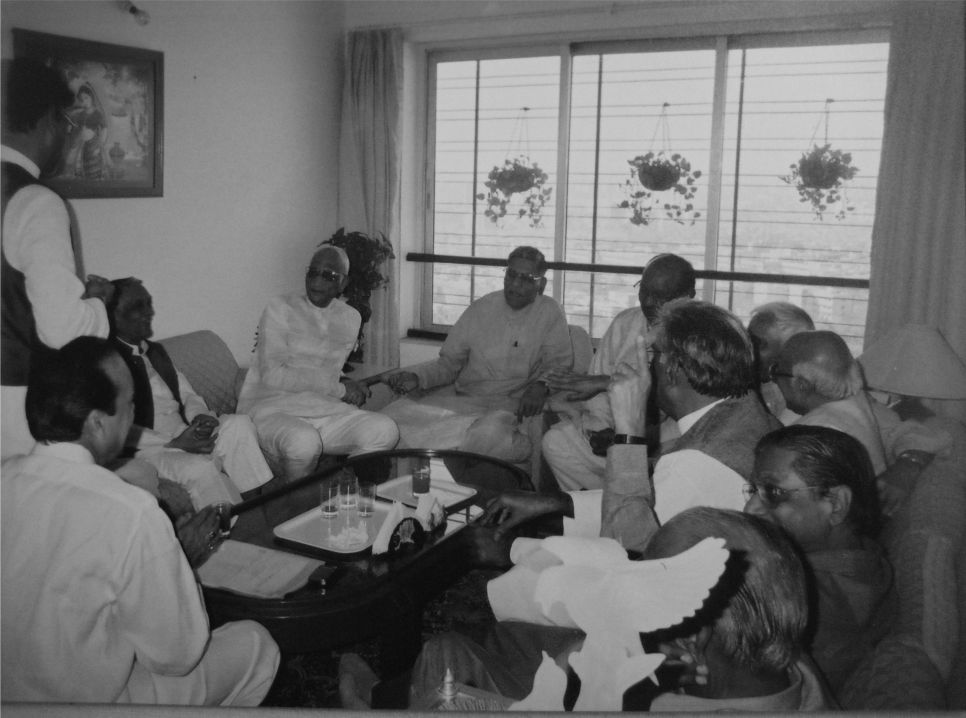
Bhaiji prepared countless Karyakartas by guiding them for years. Due to this, a culture has got created in Mandal and Samaj is getting permanent benefits. Samaj is not just a Samaj but a family, who are companions in each other's happiness and sorrow, this feeling was filled by Bhaiji in the Samaj for years.
Shri Rameshji Marda recited a poem from the stage to describe Bhaiji's working style, which is as follows-
| English | हिन्दी |
|---|---|
| Kadam milakar chalna hoga | कदम मिला कर चलना होगा |
| Badhayen aati hai ayen, | बाधाएं आतीं हैं आएं |
| Ghire parlay ki ghor ghatayein, | घिरे प्रलय की घोर घटायें |
| Paon ke neechey angaare, | पावों के नीचे अंगारे |
| Sir par baras rahi jwalayen | सर पर बरस रही ज्वालायें |
| Nij haathon se hanste hanste, | निज हाथों से हँसते हँसते |
| Aag lagakar jalna hoga, | आग लगाकर जलना होगा |
| Kadam milakar chalna hoga | कदम मिला कर चलना होगा |
| Mukt hasya mein aur rudan mein, | मुक्त हास्य में और रुदन में |
| Toofanon mein balidanon mein | तूफानों में बलिदानों में |
| Udyanon mein, veeranon mein, | उद्यानों में वीरानों में |
| Apmanon mein, sammanon mein | अपमानों में सम्मानों में |
| Unnat mastak, ubhara seena, | उन्नत मस्तक उभरा सीना |
| Peedaon mein palna hoga | पीड़ाओं में पलना होगा |
| Kadam milakar chalna hoga | कदम मिला कर चलना होगा |
GIRGAON MAHESHWARI BHAVAN
When Mandal needed its own office, the first floor of a building in Girgaon was taken on rent. Activity was increasing. In terms of medical facilities, Bombay is regarded as the best in India. So, Maheshwari brothers, who travelled from elsewhere for treatment, had a big problem of living in an expensive city like Bombay. Hence it was decided to purchase the entire building and renovate it. Funds were collected and the responsibility of renovation was given to Bhaiji. For the interim period, the office of Mandal was transferred to the same old pedi of Taparia family. Now Bhaiji got busy in that project day and night. To ensure that every penny of the society is spent economically, he worked twice as hard. But the work did not seem to get completed by the announced date of Inauguration. So for a few weeks Bhaiji and Bhabhiji shifted to stay in the building which was under construction so that he could run the work by standing there day and night. Finally, on the scheduled day, inauguration took place with great fanfare by the hands of Smt. Rajshree Birla. Even today every brick of this building is testifying that Bhaiji stood there on the site, forgetting to eat and drink.
ANDHERI MAHESHWARI BHAVAN
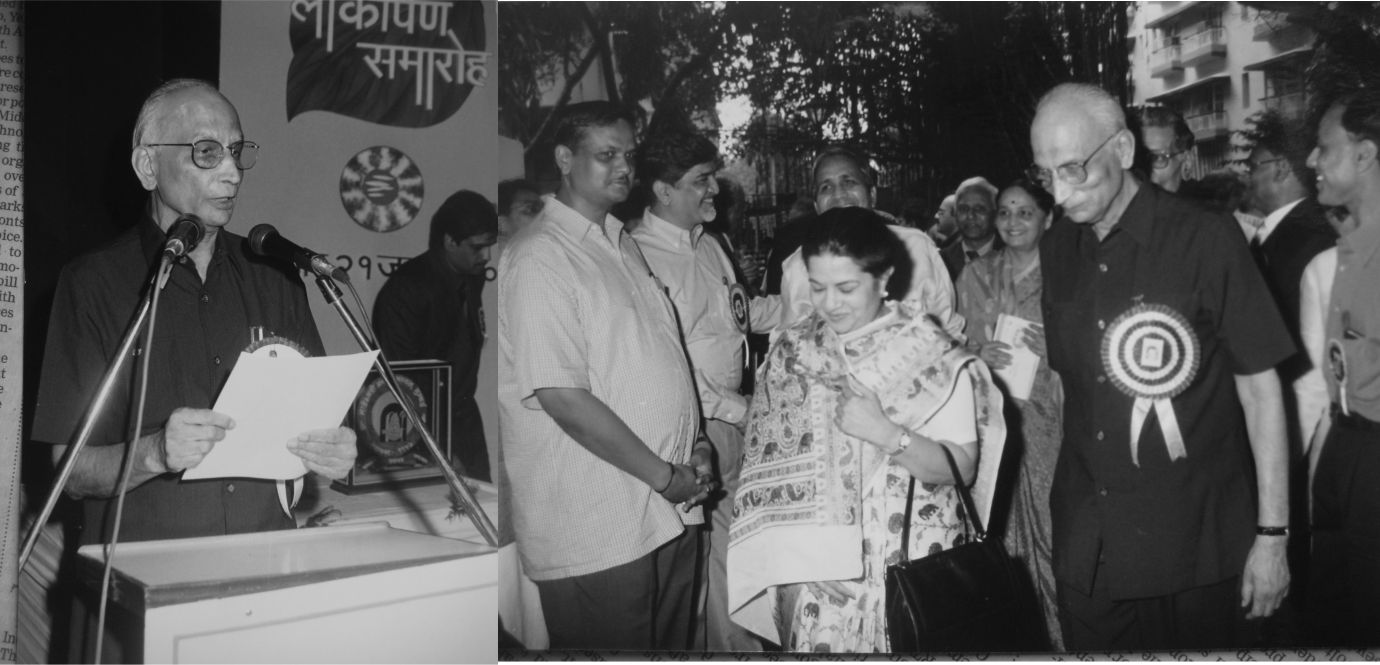
Encouraged by the success of the Girgaum Bhavan, Mandal decided to fill a big dearth of Bhavan in the suburbs of Bombay with a building which could hold large Functions such as marriages. Bhaiji played a major role in this project of Andheri Bhavan as well.
CONSTITUTION
Bhaiji got the very difficult but very important work of making a fresh constitution for Mandal and that too, by taking everyone along. In framing this, effort has been taken with much deep thinking, farsightedness and so much wisdom that it will be able to steer the Organization on the right middle path, protecting it from personal ambition and politics for years. An arrangement has been made to ensure that the interests of all sections of the Samaj are protected and that the old generation and the young generation are in synchronization.
MAHESHWARI MAHASABHA
The culture that emerged in the Maheshwari Samaj of Bombay was not existing at All India level. Maheshwari Mahasabha had already been an arena of politics, factionalism, esteem and display of grandeur since very long. Before and after independence, the atmosphere of simplicity, service, patriotism created by Great Maheshwari Personalities like Mahamana Shri Krishnadas Jajoo, Vidarbha Kesari Brijlalji Biyani, Seth Govinddas etc. and the consciousness that was ignited in the Samaj had evaporated since long.
When Bhaiji entered this akhada, it not only attracted the attention of great Titans but also of those simple and honest workers who had got marginalized. For the first time, they also saw a personality who was an embodiment of simplicity, truthfulness, selflessness. Someone they could trust closing their eyes. Soon, the demand for making Bhaiji a Padadhikari started rising in Mahasabha. But Bhaiji was far away from politics. At last Bhaiji accepted the post of General Secretary (महामन्त्री ), where there was lot of work but the crown was made of thorns. For him there was no question of powershow or manipulation for the post of chairman.
But the way everyone had accepted Bhaiji's leadership in Bombay, the same could not happen in Mahasabha. His condition of being elected unopposed could not be accepted. So Bhaiji moved away from this rat race. Ultimately Bhaiji was offered a post which was highly respected and which was safe from the play of politics. Bhaiji was made Election Officer which duty he carried out diligently.
Bhaiji remained active in Mahasabha till the end.
JASWANTGARH
Deep love for one's motherland is natural. Bhaiji also did great service for decades for the upliftment of the village. Bhaiji used to join in good schemes that came up, with all his heart and soul whether it was a HITKARINI SABHA or GOSHALA. Bhaiji was the one who was worthy of reverence and respect of the villagers.
Bhaiji played a major role in the Redevelopment of Taparia family Dispensary औषधालय and Lakshmiji temple, and in establishment of a school in the name of Mataji Pyaridevi
All of the Taparia family members used to put the responsibility for all of the tasks related to Jaswantgarh on Bhaiji until the very end of his life and Bhaiji used to accept that burden happily.
However, despite his best efforts, Bhaiji was unable to accomplish in the village what he was able to do in Maheshwari Pragati Mandal : create a culture free from politics. He regretted that till the end that he could not free the village from factionalism and politics.
VIPASSANA
The proverb 'Every event is an opportunity' applied to Bhaiji in a very interesting way. Busy in business and social work, Bhaiji initially neither had interest nor faith in Religion or Spirituality. He was a Karmayogi. It so happened that two or three Social Workers of Maheshwari Samaj who had been working day and night shoulder to shoulder with Bhaiji for years, died one after other in a short span. This event had such a deep impact on Bhaiji that he had severe depression. He believed in only allopathy, so a famous doctor of Bombay treated him for months, but to no avail. Bhaiji remained on bed in his room for months. He used to brood that something would happen to him too.
When allopathy didn't help, a host of alternate treatments started. One Shri Bhatiaji made him do Asana Pranayama which gave some relief but the depression persisted. Meanwhile, one Motilalji Chowdhary, who was an old businessman friend of Bhaiji from Rangoon, came to meet him. He suggested very lovingly that one Satyanarayanji Goenka has come from Burma, who was going to conduct a 10-day meditation camp called Vipassana. When you have made all kind of efforts to cure, why not try Vipassana as well.
Bhaiji did not have any faith in his idea but he used to value friendship a lot. He agreed to spend 10 days just to respect his friend. Those 10 days proved to change the direction of Bhaiji's life.
Apart from Bhaiji, only the friends and family of Satyanarayanji Goenka attended his first camp in India.
What a dying person would not do ?. Bhaiji was of sincere nature. So, he did meditation (sadhana)with full focus. And a miracle happened!!! His many months old depression disappeared in just 10 days!
Perhaps Destiny wanted Bhaiji to get involved in Vipassana, for which all this drama took place. From that day, Bhaiji developed a lifelong attachment to Vipassana. He inspired countless people for it and made tireless efforts to propagate it. He served in the Management Team of the biggest center of Vipassana ie Igatpuri till the end.
It can also be said that Vipassana was the reason behind Bhaiji able to stand steadfast against many storms in his future life, being calm and detached in solving every problem and walking on the right middle path. Many in the Taparia family also adopted Vipassana, the main source of inspiration for which was Bhaiji.
Dr BALAJI TAMBE
Here is second example of 'Every event is an opportunity'. Our youngest Brother-in-law जीजाजी Shri Daulalji Mohta had a heart disease at a young age. He went abroad twice and got bypass surgery done twice. When angina recurred for the third time, the doctors gave up. Then someone suggested the name of Dr. Balaji Tambe. Since there was no other solution in sight, Bhaiji took Daulalji to Dr. Balaji Tambe. After that, what had to happen, happened. Not only did Jeejaji get benefited, Bhaiji also began Tambeji's lifelong medication as a preventive, despite the fact he did not have any heart problem. After that Bhaiji chased and inspired all those whom he knew and had heart disease. Hundreds of heart patients acknowledge Bhaiji even today.
Dr DHANANJAY GUNDE
Somebody introduced Bhaiji to Dr. Dhananjay Gunde, an orthopaedic surgeon from Kolhapur. He used to conduct a two-day camp where Art of living was taught in addition to Asan, Pranayam, Diet etc. Hundreds of people attended his programme with Bhaiji's inspiration.
Dr Gunde became unwavering friends of Bhaiji and our family.
Dr NEEPA SHAH
She is a physiotherapist. Bhaiji went to her for physiotherapy for a long period. She used to do physiotherapy and Bhaiji used to do her sneh therapy. Bhaiji gave such tips on her personal life that she became Bhaiji's daughter forever.
A FEW INSPIRING EVENTS
First :
Once mother urged Bhaiji that all daughters-in-law बहू have gold and pearl ornaments but not diamonds. So it had to be made for everyone. With the help of his best friend Pannalalji Zaveri, who used to do diamond work, Bhaiji sorted the diamonds and got diamond sets made. When the price of each set was estimated, there was a difference of about three thousand rupees between different sets. Bhaiji decided that the set with the highest price would be given to the youngest daughter-in-law बहू and in the same way the sets were distributed to all the daughters-in-law from youngest to eldest.
Second :
Bhaiji had gone to Nagpur somewhere during 1963 for some work of the Mahasabha. A friend of the Samaj introduced him to a young boy from Maheshwari community there.
He shared that he had set up a small scale industry for the first time in his life. It made losses due to some reasons, and that he was thinking of closing it.
Bhaiji understood the whole problem very closely and went to see the factory. Liked the factory and his work. He felt that it was time to start setting up industry in Nagpur. If this boy stopped a running Industry, then no one else in the Samaj would have the courage to start any Industry. So he advised that I can give you a job but I would not want you to stop the Industry. I can give you loan. Pay whenever and whatever you can, but you have to be successful.
The young man was astounded to hear this. Here was a stranger, inexperienced young man with his first failed industry! Someone was giving him financial help without asking for it, without guarantee. That too for the reason that the courage of the people in Samaj should not be broken to set up Industries. He wondered whether such a person in the real world exist ? Despite this offer from Bhaiji, the young man had to stop work due to his family reasons. He met Bhaiji again and Bhaiji supported him and employed him in his company Taparia Tools Ltd. Today he is a respected person in Samaj. It is not surprising that Shri Balkisanji Maniyar regarded Bhaiji more than his father.
This was a case which came to limelight. But there was a long series of persons with personal problems whom we will never know whom Bhaiji helped. Even Bhojaiji did not know the list fully. Nowadays, where reputation is bought by giving donations, the matter of silently helping and forgetting about it seems like a matter of Satyug.
Third :
Bhaiji called Mundra brothers, sons of his paternal aunt भुवाजी . The credit for making them stand on their feet by bringing them up goes only to Bhaiji. A Happy family of 8 brothers, who have complete love for each other!
Bhaiji called them and lovingly explained to them that it was the right time when they all should plan Separation. They were stunned not understanding why Bhaiji was suggesting Separation when there was absolutely no issue within family. On being explained, they could understand to some extent and could not understand to some extent. But trusting that whatever Bhaiji says must be out of wisdom, they Separated in business. Many decades have passed since then, but till date they remember this event and sing praises of Bhaiji that because of heeding to Bhaiji, there is profound love among all the brothers till date and among their sons and grandsons even today.
Fourth :
Our father Hanmanbagasji had a heart attack in 1972. There was a lot of improvement after staying in the hospital ICU for a long time and he was shifted to a normal room. There was every possibility of taking him home after a few days.
Meanwhile, time came for my nephew Vinod's marriage. The doctor had given special permission to bring father from the hospital to the reception for a few minutes for blessing the groom. I was entrusted with the responsibility of bringing him. Everyone was enjoying the reception and there was still some time left to bring father. Suddenly Bhaiji quickly walked up to me and whispered, 'Bapuji is not feeling well, you reach hospital immediately.' I could clearly feel that the hand that held my hand was trembling badly. I could not understand as to what would I be able to do there alone if he wasn't feeling well. But he sent me off and got busy welcoming the guests.
When I went running to the hospital, the atmosphere was different. No one was there in the room and my sister was standing outside, sobbing. Only then did I understand that my father was no more and this News had already reached Bhaiji.
As soon as the News was known to Bhaiji, he had made an emergency plan that this shocking news should neither be known to anyone at the wedding venue nor at home till the time the marriage was over and the bride and groom leave the Venue. No news should come out of the hospital. If he had run away to the hospital or even told his other brothers, Vinod's marriage was bound to get disrupted. Even if the marriage had been completed, it would have been in a gloomy environment. Therefore, he was accepting the greetings of the people with a smile on his face while handling the Catastrophy within his heart. He was busy in getting the reception, phera and farewell done as fast as possible.
That day I witnessed with my own eyes that the man, who was moved by the sorrow of others could also become an iron man at such an occasion.
Fifth :
The wind of social reform was blowing in Maheshwari Samaj of Mumbai. The leaders of Mumbai Maheshwari Samaj together made rules to halt the race of Show spending exhorbitant money in marriages. It was announced that the rule applies first to the office bearers of the society. Bhaiji also took a vow to follow the rules. One of the rule was that number of Baraatis should not exceed 50. If it exceeds 50, then the Padadhikari of Mandal shall not be a party to the Baraat.
My (Jaiprakash) marriage got arranged in May 1970. Realizing the problem of the above rule, the family made policy within few years that whether it was boys' side or girls' side, the people from the other side would be invited to Bombay. The pitiable girls' side had to agree.
But my Father-in-law, who was a prominent social worker of Nashik, requested that it was the first marriage in their family in which thousands of local people would like to attend. So Taparias should come to Nashik as Baraatis. His request had to be accepted.
Now there was an uproar in the house itself. Everyone failed in making a short list of 50 baraatis in such a big family. The non-reformists got angry and said that they would not follow the rule of 50.
Bhaiji was caught in dilemma. If a list of 50 was made, then count of our son-in-laws जँवाई itself would be 50. None of the family members would be able to go. If a list of Baratis above 50 was made, then vow would be broken. At last Bhaiji took a tough decision that he would not go with the baraat of his most beloved youngest brother, who was like his own son. I came to know about it after some time. I too persisted that I would not marry without Bhaiji. At last, Suman Bhojaiji ( wife of Shreeramji ) counselled me. Today I don't remember how she counselled , how was I persuaded. But, that day I learned that at times one may have to keep one’s own desires aside for the sake of family.
When I returned from Nashik by train after marriage, Bhaiji himself came to receive me at the Station, as if he was soothing my wound and giving consolation that even though he could not attend the Wedding, he was standing with me.
Sixth :
In a similar way, it was decided to go to Surat for the wedding procession of my nephew Bharat. As usual Bhaiji was handling all the Functions of marriage. Same problem of limit of 50 baraati arose. Without anyone asking him, he himself decided that he would not go in the baraat. So he was doing all the arrangements for the departure of the baraat with double eagerness. There was a train very early in the morning, so all the preparations had to be done at night itself. Bhaiji himself was getting food items packed for the journey of the baraat, so many were involved in packing. This went on through whole night. Tired late at night, everyone slipped to sleep one by one, but Bhaiji and the staff were still carrying on. In the morning when everyone got up to catch the train, they were ashamed to see that the energetic Eldest person ie Bhaiji with his team of staff was still busy packing the eatables for Baarat. Bhaiji went to sleep only after sending off the Baraat.
Seventh :
A small meditation room was made in our house. Once an injured pigeon somehow entered and took refuge in that meditation room. Being affectionate for anyone seeking refuge (शरणागत वत्सल), Bhaiji took up the task of saving the life of that pigeon. It was given medical treatment, was cured and released into the sky.
Eighth :
Bhaiji was associated with PETA organization, which is an Organization that protects animals from cruelty. Once he got a call from Mrs. Sugya Patkar of PETA. About 15-20 half-dead camels were handed over to PETA by the police at Juhu beach whose owners were making money off their plight. Now those camels had to be taken to Rajasthan their home place and to be left in the custody of persons who would protect their lives. How could Bhaiji reject the appeal of mercy for any Living Being (जीव दया)?
But this project turned out to be very difficult. First of all, getting trustworthy Jats at Rajasthan who would take care of them lifelong. Then finding such truckers who could carry live camels. Then to find a person who knew the technology of loading camels on trucks. The scene was worth watching. The camels were being surrounded and herded near the truck, but the camels were not ready to climb the ramp built behind the truck at any cost. Based on their past experience, those camels were trembling that perhaps they were being taken to the slaughterhouse. After hours of circus, the convoy of trucks full of camels was able to leave and it reached Rajasthan. 2-3 camels died on the way. Perhaps they were already on the verge of death, but we felt very sad for them. The rest of the camels reached safely. Many examples of kindness for life (jeevdaya) would be found, but the event to rescue camels from torture in that way was a historical event.
In that project, Sugya Patkar, the president of PETA, met Bhaiji and being influenced by him, she made him her brother and this relationship is being maintained even today.
Ninth :
My son Sharad was having fun and chatting with his friends circle at the ground floor of our building. It is not uncommon for some foul slang words to be used among friends at that age. Sharad used some dirty word not realizing that Papaji got down and passed by him at that very moment and heard. Papaji did not react, just stared at Sharad for a while and then went ahead. That strange stare was so piercing to his heart that he determined not to repeat the same in future.
Tenth :
The Maheshwari social workers सामाजिक कार्यकर्ता of Bombay used to go out of Bombay many times to participate in some program of Mahasabha. Bhaiji started the practice of planning the journey in groups instead of travelling separately. How could a group travel together if some people travel in flight, some in first class or two tier or three tier AC and some in sleeper? Bhaiji Bhojaiji used to undertake their personal trips in 2 tier AC. So, the only way to bring everyone on the same level was to make group booking and travel in sleeper class. Bhaiji himself took the monopoly of arranging food tiffin for the whole group every time. However, the burden of that arrangement used to fall on Suman Bhojaiji. Soon after boarding the train, conversation used to start with excellent tasty food, that is, inquiry about personal well-being and then continuous discussion on the issues of Mandal and Samaj. At last, everyone used to request Bhaiji that it was enough discussion and now he should go to sleep. Bhaiji used to understand that they wanted to play cards.
Bhaiji had rightfully taken the responsibilities of even the marriage ceremony of some very close Social workers of Mandal in his hands.
Eleventh:- Madhushree Kabra
He was a firebrand social worker. Despite financial hardship, he was an ardent follower of morality, simplicity and social reform. He was a fearless journalist who directly attacked social evils, ostentation and weaknesses. Bhaiji recognized this Diamond and looking to his financial difficulty appointed him as his assistant with the idea to help him financially. As soon as Madhushree Kabra got the sustenance to live, he started speaking eloquently regarding the masks of the then leaders of Samaj with his forceful writing. His style was totally opposite to that of Bhaiji's style. Bhaiji used to counsel him that his points were correct, but the way of expressing them was wrong. But Bhaiji did not stop him by using his authority. Articles published in Madhushree Kabra's magazine 'Samaj pravah' समाज प्रवाह created so much uproar that pressure was put on Bhaiji to remove Madhushree Kabra from his job. But Bhaiji maintained the freedom of Madhushree Kabra tolerating all the pressure. He said that every person is free to do whatever he believed in his social life.
Twelfth : Avoiding the election in the Mandal
In Mandal, the tradition of universal selection instead of election was successfully established by Bhaiji. Only those nominations would be filed which were decided unanimously. There used to be a long process of dialogue at every level. On one occasion this process failed. Some gentleman insisted that he would definitely file the nomination. Many people tried to pacify in vain. At last, Bhaiji went to his house. We don't know how what happened, who said what, but eventually, he agreed not to file.
Will :
Bhaiji had made his WILL long back. He set a perfect example in that too. Some part of the WILL is being shared where Bhaiji gave funds for some charitable works of the society, so that there could be permanent improvement.
- Assigned Rs 20 lakh for the centres of Vipassana meditation to provide necessary financial assistance.
- Assigned Rs 10 lakh for the Cow Breed Improvement Project. Bhaiji believed that the only sustainable way to protect cows was through systematic improvement of their breeds.
- Assigned Rs 20 lakh to Maheshwari Pragati Mandal for creating a corpus fund to organize lectures and programs aimed at providing the right direction and inspiration to society. These annual programs have proved to be highly effective and popular.
- Assigned Rs 10 lakh for the marriage of underprivileged girls, medical assistance and health camps for the poor, and for promoting moral education and patriotic awareness in the Jaswantgarh school.
DUSK OF LIFE (Jeevan Sandhya)
Due to health awareness, due to the medicines of Balaji Tambe and due to Karmayoga, Bhaiji's health was excellent even in the 86th year of his age. But immunity does decrease with age.
Bhaiji had to go to Rajasthan in winter due to some family problem. When he came back, he had fever. The treatment went on for a few days but since that did not help, he was referred to Dr. Kartik Shah, a lung specialist. His treatment also did not help, so he did an endoscopy biopsy. TB was diagnosed and treatment started. Bhaiji was completely cured with the treatment which lasted several months. But the immunity had decreased.
A mistake was then made for which a too heavy price had to be paid. Bhaiji had to go to Pune for a family marriage. He had to stay there in AC hall for the whole day. It was not noticed there, but as soon as he came back, he was again down with fever. The treatment that started again and went on for a few days did not work, so he was taken to Dr. Kartik Shah on July 4, 2014 for consultation. Something clicked in his head as he checked him. Immediately X-ray was ordered. A a huge patch was found in the lungs. He immediately called up our family physician cum our son-in-law Dr. Maheshwari. He told that Bhaiji was not even in a condition to go home. He was admitted then and there to Bhatia hospital. Antibiotics were started. When the disease was not getting diagnosed till 9th of July, there was a talk of doing biopsy of lung. For this, he was shifted to Breach Candy Hospital where treatment of both Dr. Kartik Shah and Dr. Zarir Udwadia started. A biopsy was done, the report of which was received after 3 days. Meanwhile, X-rays were being done daily and the lung patch was increasing in spite of antibiotics. Dr. Kartik Shah came running as soon as he got the report. Told that the bacteria which had taken Bhaiyaji in its clutches and on which no antibiotic is working, was a rare bacteria called Nocardia, which very rarely, but gets hold of only such people whose immunity was very low. Now the right antibiotic treatment was started but by then it was too late. Nocardiosis had severely constricted the lungs function. The decisive great war between antibiotics and nocardiosis began. Despite the oxygen tube, breathing with the remaining lung was becoming difficult day by day. The patch had stopped growing in the X-ray, which was considered a victory. But the good News of patch reduction was not coming.
As soon as the News spread in the whole family, among the Relatives and in the Maheshwari community, people started pouring into the hospital. We had to bring out daily health bulletin. Meanwhile, Bhaiji started sensing that the fight would not last long. So he called some people and started giving instructions for his left out urgent tasks.
Even in such a serious condition, those close people who got a chance to meet Bhaiji, he spoke to them more about their well-being and the problems of their life rather than his own health. That was his habit.
On the night of 20th July 2014, Bhaiji vomited lying in the ICU, which went into the lungs due to weakness. Now it was a losing Battle. Breathing became very difficult. He could not even speak. Had to express his words by writing on a paper. It appeared that the people in the ICU also understood that the case was out of hand but they kept on doing their duty. At last, Bhaiji took his decision and called Dr. Maheshwari and wrote that he wanted to go home. That very difficult question (yaksha prashna) was put to all those standing outside. The general medical policy is that as long as the treatment is possible, efforts should not be given up. Bhaiji did not just wish, it was his decision his Order. So, it was not really a question put to us, it was just a formality which we had to accept. The most difficult task was to ask Suman Bhojaiji about this. But, surprisingly she too had started preparing herself for that moment for past many days. We all saw that form of a brave man and his valiant lady (वीरांगना) with awe and reverence.
After consulting everyone, Dr. Maheshwari again went inside and asked Bhaiji, 'Do you understand the meaning of going home, don't you?', Bhaiji firmly nodded YES.
The ambulance reached home on the afternoon of 22nd July. The room was converted into makeshift ICU before he reached. Till that time Bhaiji was finding it very difficult to breathe. Dr Chhablani, ICU specialist was called. He immediately removed the mucous using suction. As soon as it was removed, the pain of breathing disappeared and Bhaiji slept very peacefully in a deep sleep. We were all relieved to see that his last moments were spent at home as per his wish and were not painful either. All the vital parameters of the body were gradually coming down. Dr Chhablani stayed put. Finally, on 22 July 2014 at 7.15 pm, he informed that Bhaiji had left for his eternal journey after completing the last chapter of his life. Even in those last moments, Bhaiji set an example in front of the society of dying gracefully.
Fulfilling our resolve to be worthy of Bhaiji, we all bid farewell to him without shedding tears.
Now we had the important task of performing Bhaiji's last Rites. Bhaiji had already given us a two-page printout many years ago with deep thought on that subject. Even in the last chapter of life, he did not miss the opportunity to set an ideal in front of Samaj. Instead of writing something about it, it is being shared as it is.
All the work got organized according to the essence of this writing. All the family members showed immense patience throughout and the atmosphere of the house remained completely peaceful and spiritual. Departing from old orthodox rituals, only symbolic and emotional rituals were completed.
More family members, Relatives, and members of the Maheshwari community attended the funeral procession than was expected. There was a huge attendance at the prayer meeting as well. That presence was not a mere formality. It belonged to those people who had Bhaiji seated somewhere deep inside their hearts. Everyone paid heartfelt tribute to the Taparia family and the YUGPURUSH of Mumbai Maheshwari Samaj.
Bhaiji did not want salvation. He was a Karmayogi who would kick his own salvation and willingly accept the cycles of worldly movement birth after birth, only for the sake of Service to Mankind.
We consider ourselves extremely fortunate that we got a life long proximity of a Great Soul like Bhaiji.
This Saga is not of a person but of a majestic Banyan Tree which gave love affection, gave shelter and brought up innumerable people. It is a Saga of a Detached Karma Yogi who digested poison, said No to fame and sacrificed his life for Family and Samaj.
Inspiration for the book
My elder brother and sister-in-law were like parents to me. I came to Bombay in 1956 and enrolled in the sixth grade; from then on, it was they who shaped my entire life. My childhood, my education, my marriage, my entry into business, the birth of my children, watching them grow up, their marriages, and even the time when I became a grandfather—all of it was managed by Bhai Ji. Everything happened under his guidance and protection. We had become so accustomed to his guidance that it felt indispensable. Being the youngest among seven brothers, I was used to receiving blessings, and there were many people to bless me.
Since childhood, I had seen that whether it was a business problem, a family issue, or a social concern, it seemed as though Bhai Ji had been born specifically to solve such problems.
In the hustle and bustle of life, I never even imagined that a day could come when Bhai Ji would no longer be with us. Now, whenever family problems arise, his absence is deeply felt.
After his passing, countless people shared their feelings about Bhai Ji and their experiences with him. It then occurred to me that if all these thoughts were not recorded, both the family and society would be deprived of many invaluable insights. I also felt that I was perhaps the fortunate one who had observed all facets of Bhai Ji’s personality from very close quarters for a very long time and possessed at least some ability to write. Deep within, I do not know what inspiration was driving me. So I began writing. But once I started, I realized that this task was not as small as I had imagined.
By then, there was no turning back. The family and the Maheshwari community already knew that I had begun writing. There was no option but to keep moving forward. It felt as though some invisible force was pushing me to complete it. I had no idea that this writing would take so much time and cost me so many sleepless nights. Even so, I had thought it would take two or three years—but it ended up taking a full nine years! For this, I seek forgiveness from all readers.
To truly understand Bhai Ji, one must know him in three ways: through his biography, through the articles he wrote, and through the tributes written about him by those who were close to him. This book is a humble attempt to compile all three. If it achieves even a little success, I shall consider myself fulfilled.
If this book is read and appreciated, the credit belongs entirely to Bhai Ji’s inspiring life.
— Jaiprakash Taparia